Lofoten Islands Photography
Lofoten is shaped by sea, mountains and restless Arctic light. This photography portfolio follows traditional fishing villages such as Reine, Hamnøy, Sakrisøy and Nusfjord, together with open-ocean beaches, winter fjords, midnight sun and northern lights across one of Norway’s most distinctive coastal landscapes.
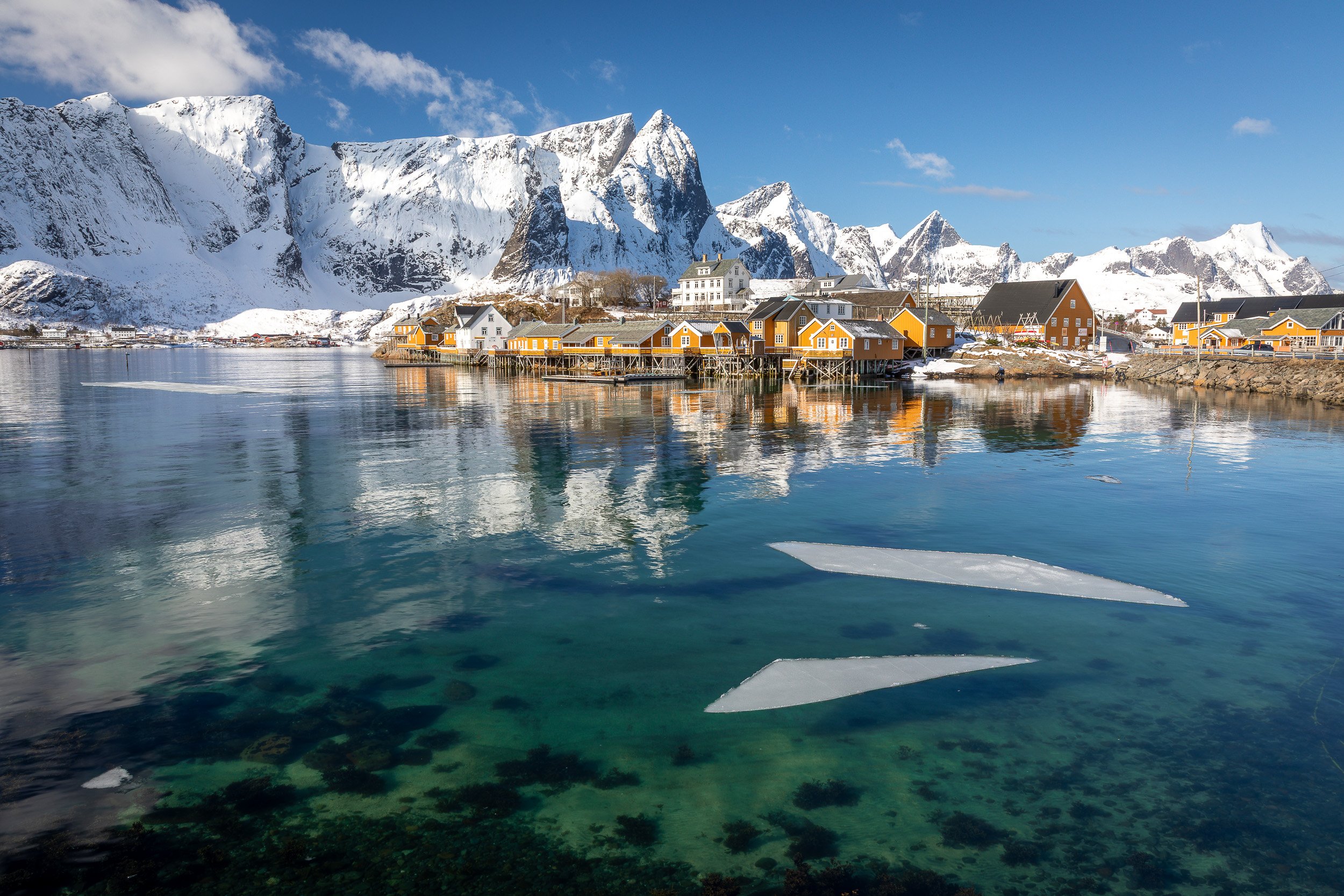
Sakrisøy fishing village in the Lofoten Islands, Norway – yellow cabins on stilts between turquoise water and steep mountain peaks.
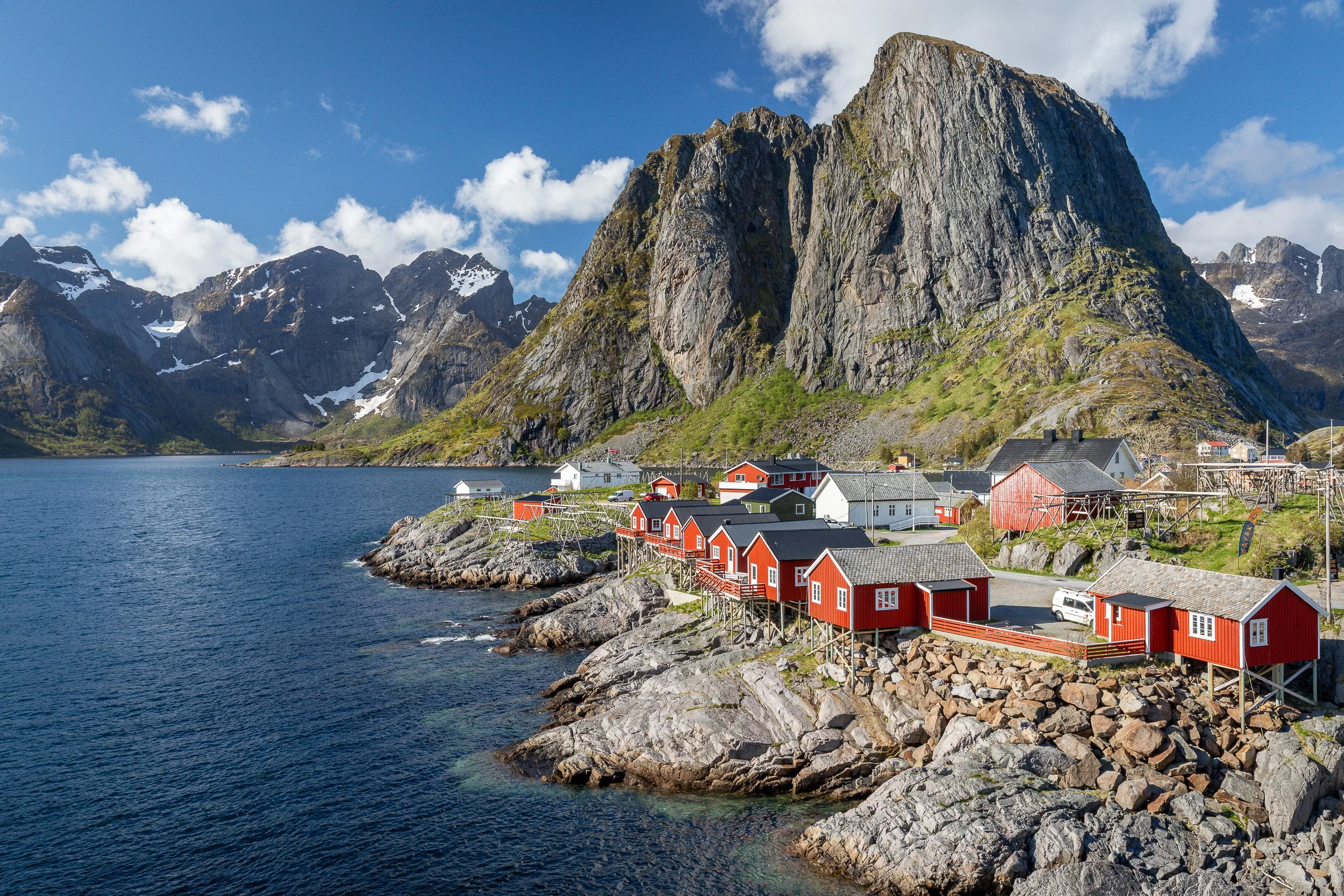
Fisherman’s cabins in Hamnøy, Lofoten Islands, Norway – red rorbuer on rocky shoreline beneath dramatic mountain walls.
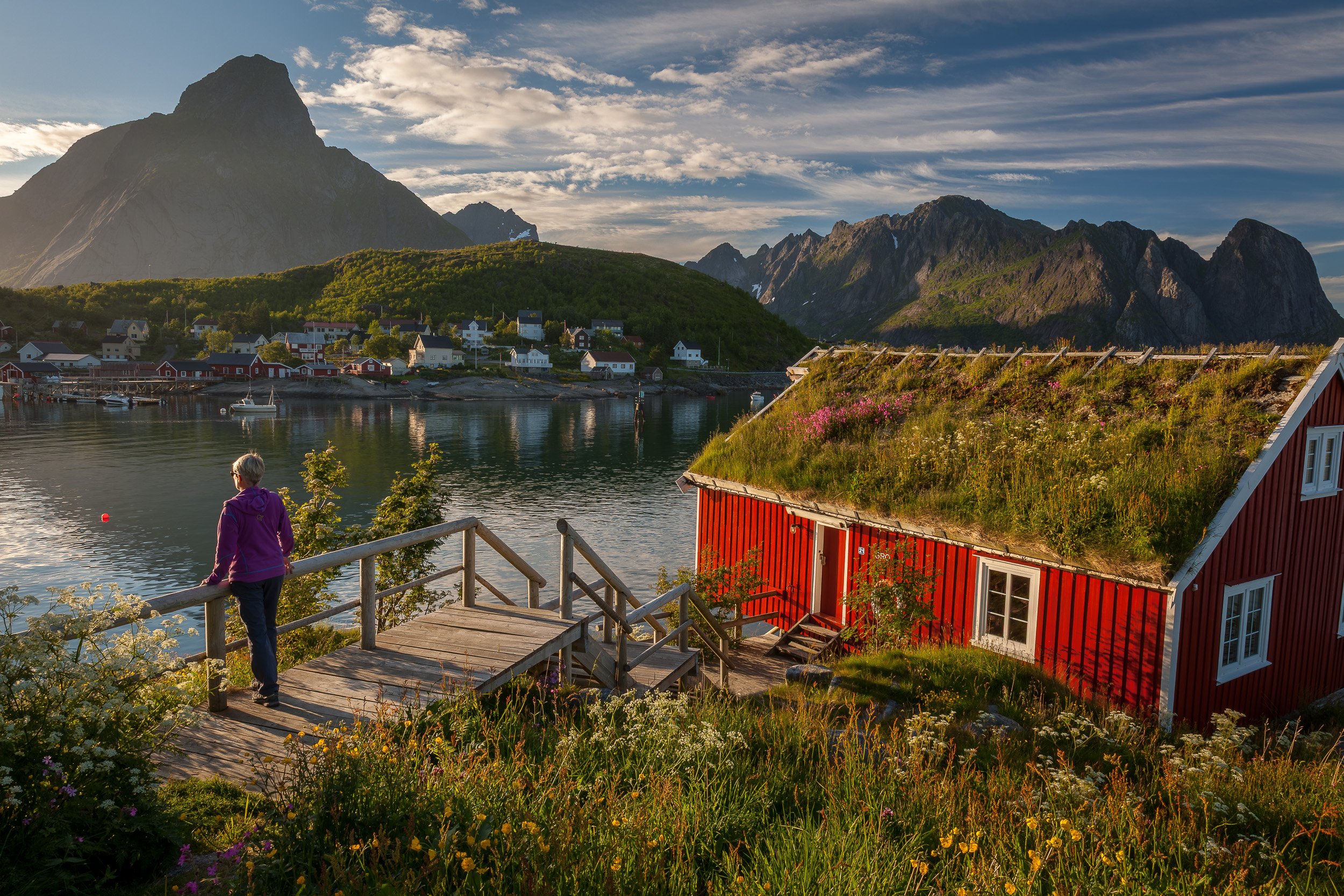
Fisherman’s cabins in Reine, Lofoten Islands, Norway – traditional red rorbuer along a calm fjord framed by sharp granite peaks.
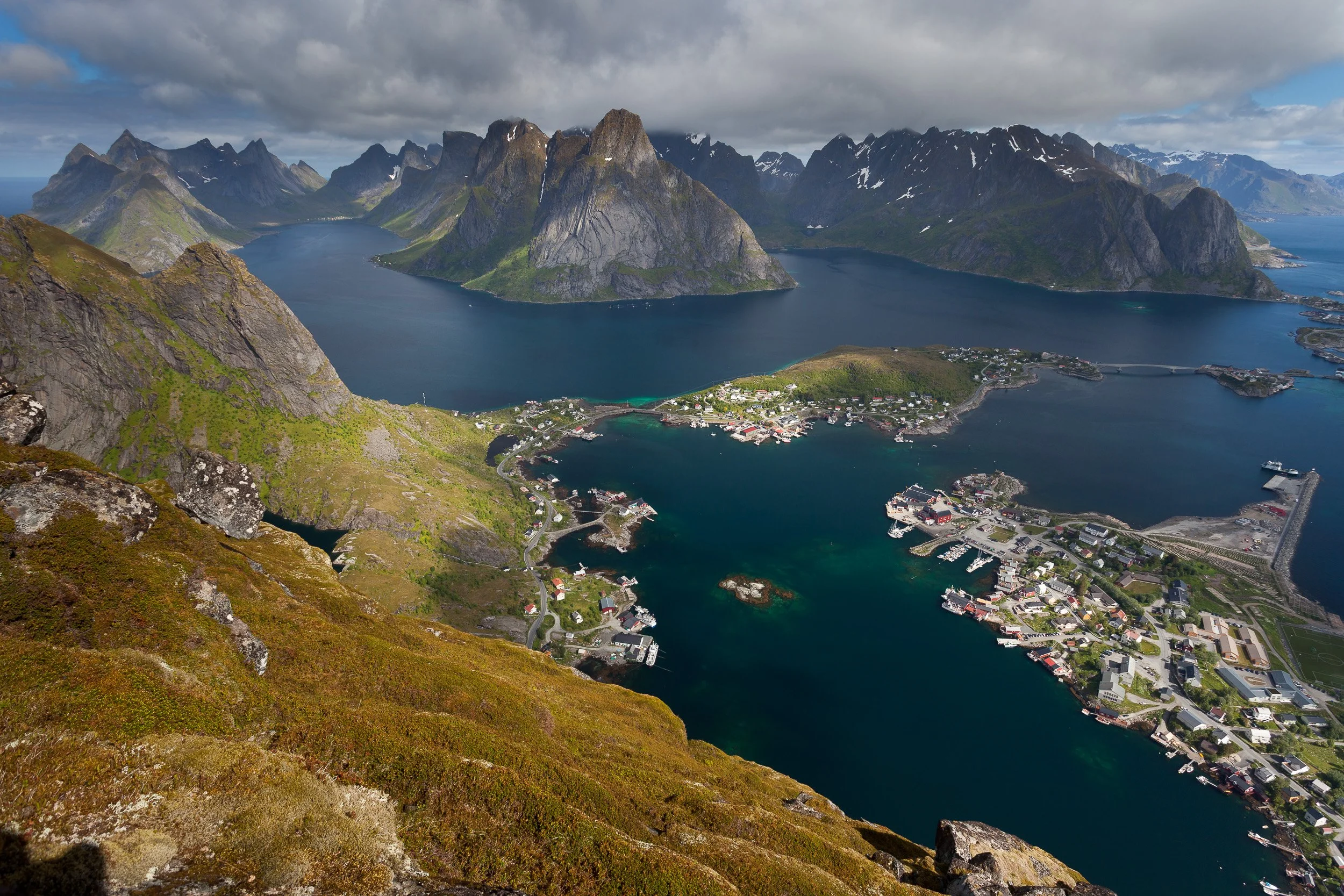
View from Reinebringen above Reine in the Lofoten Islands, Norway – panoramic fjords, islands and jagged mountain ridges.
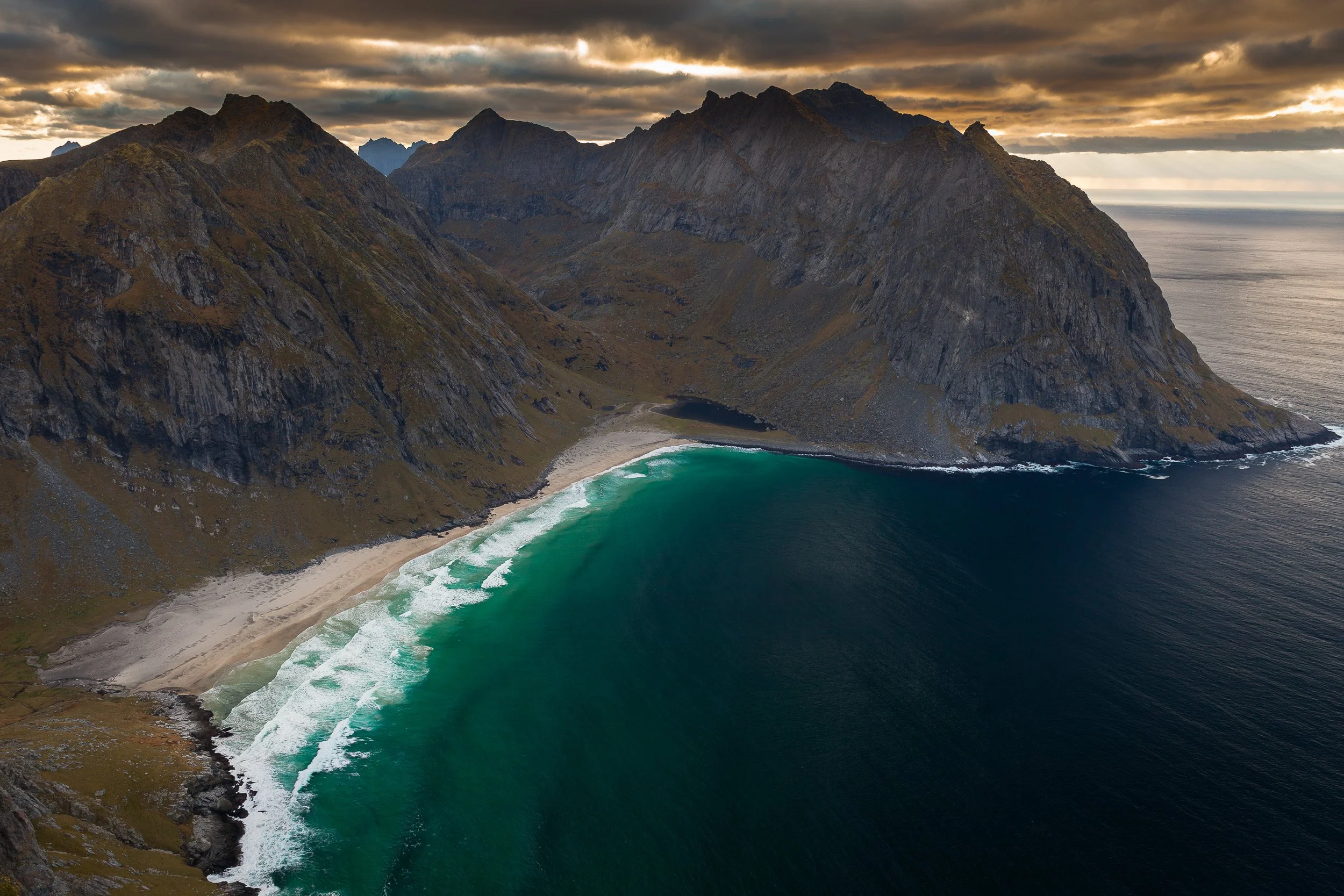
Kvalvika Beach in the Lofoten Islands, Norway – remote sandy bay enclosed by steep mountains facing the open ocean.
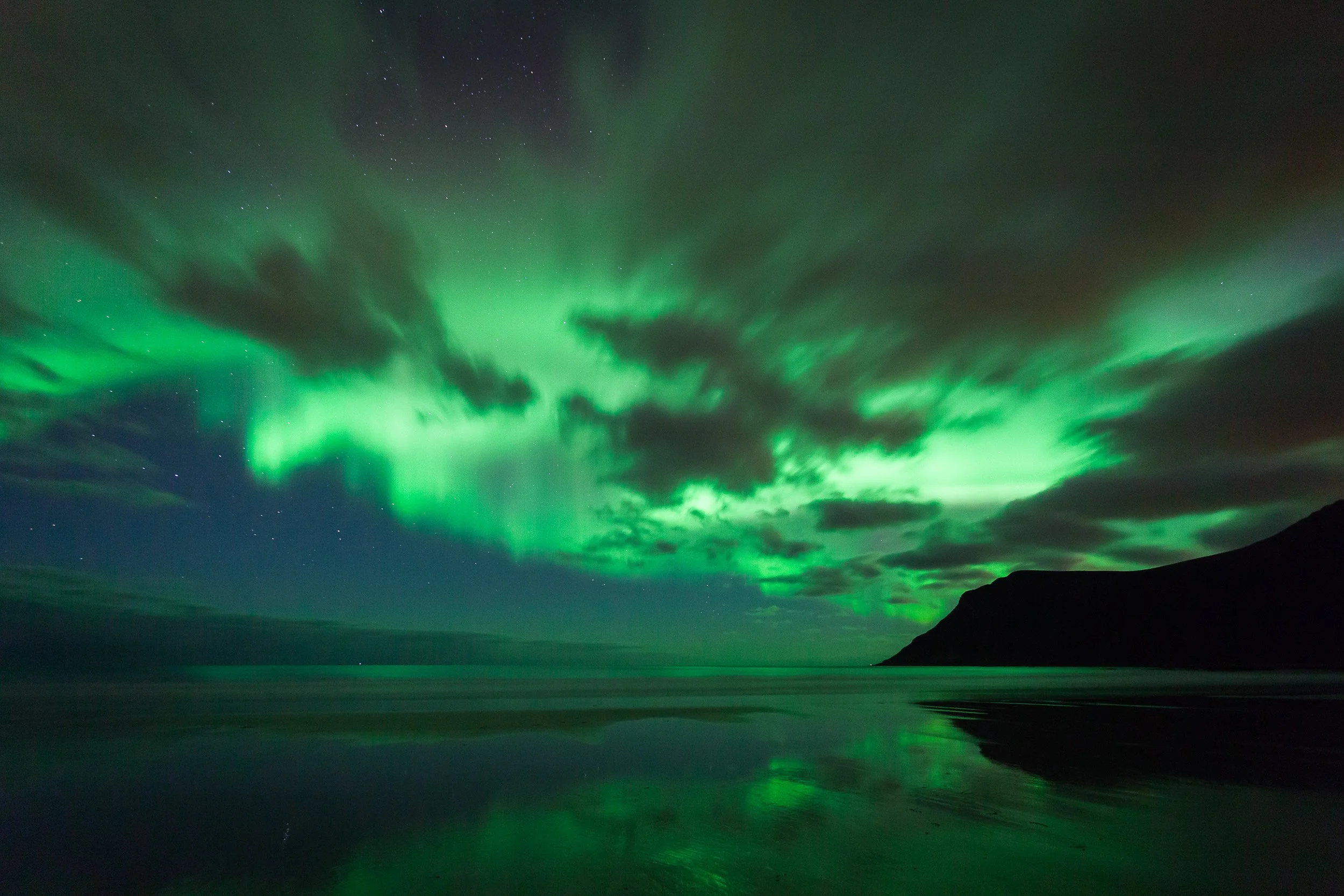
Northern lights (aurora borealis) in the Lofoten Islands, Norway – green curtains of light above mountains and open sea in the Arctic night.
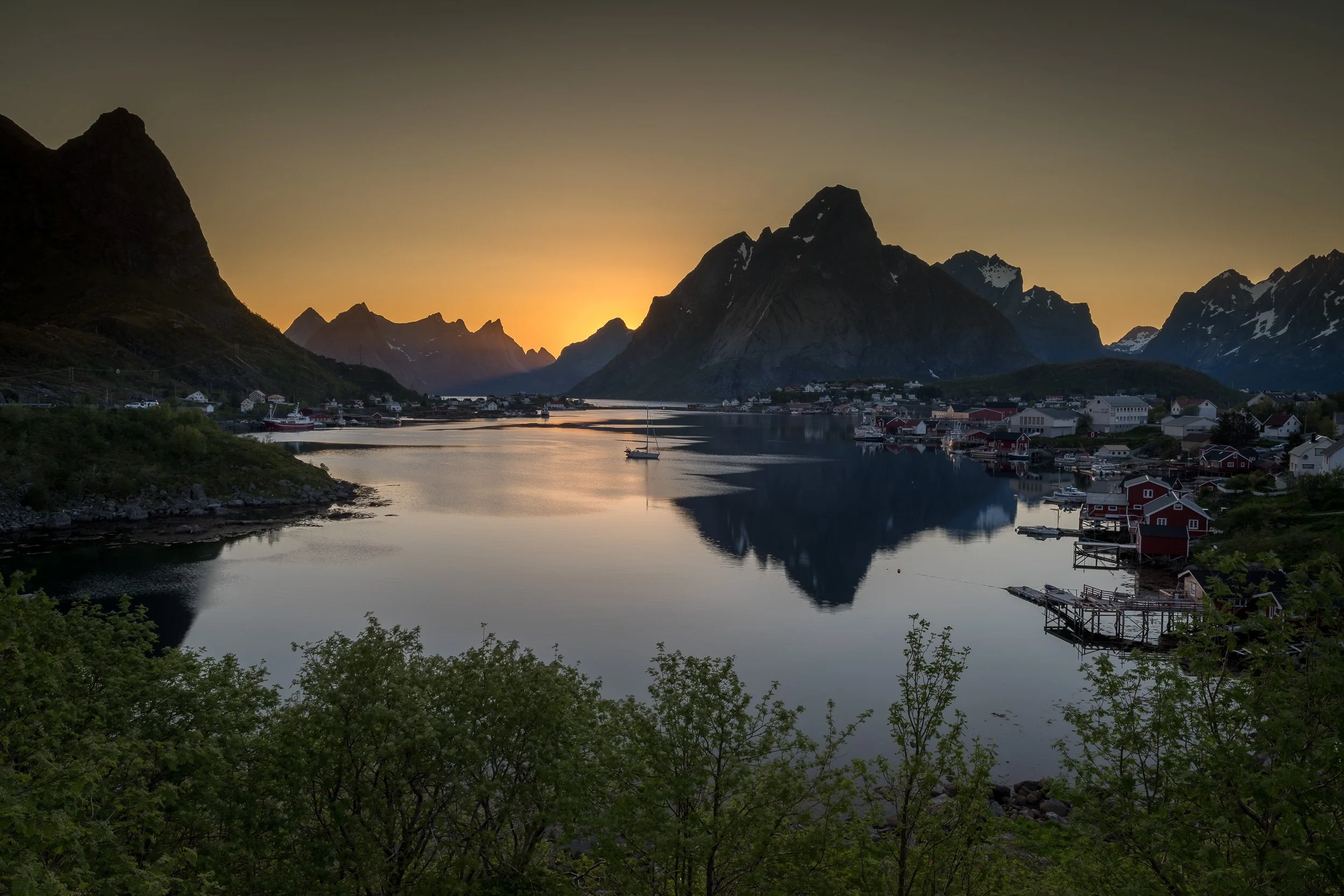
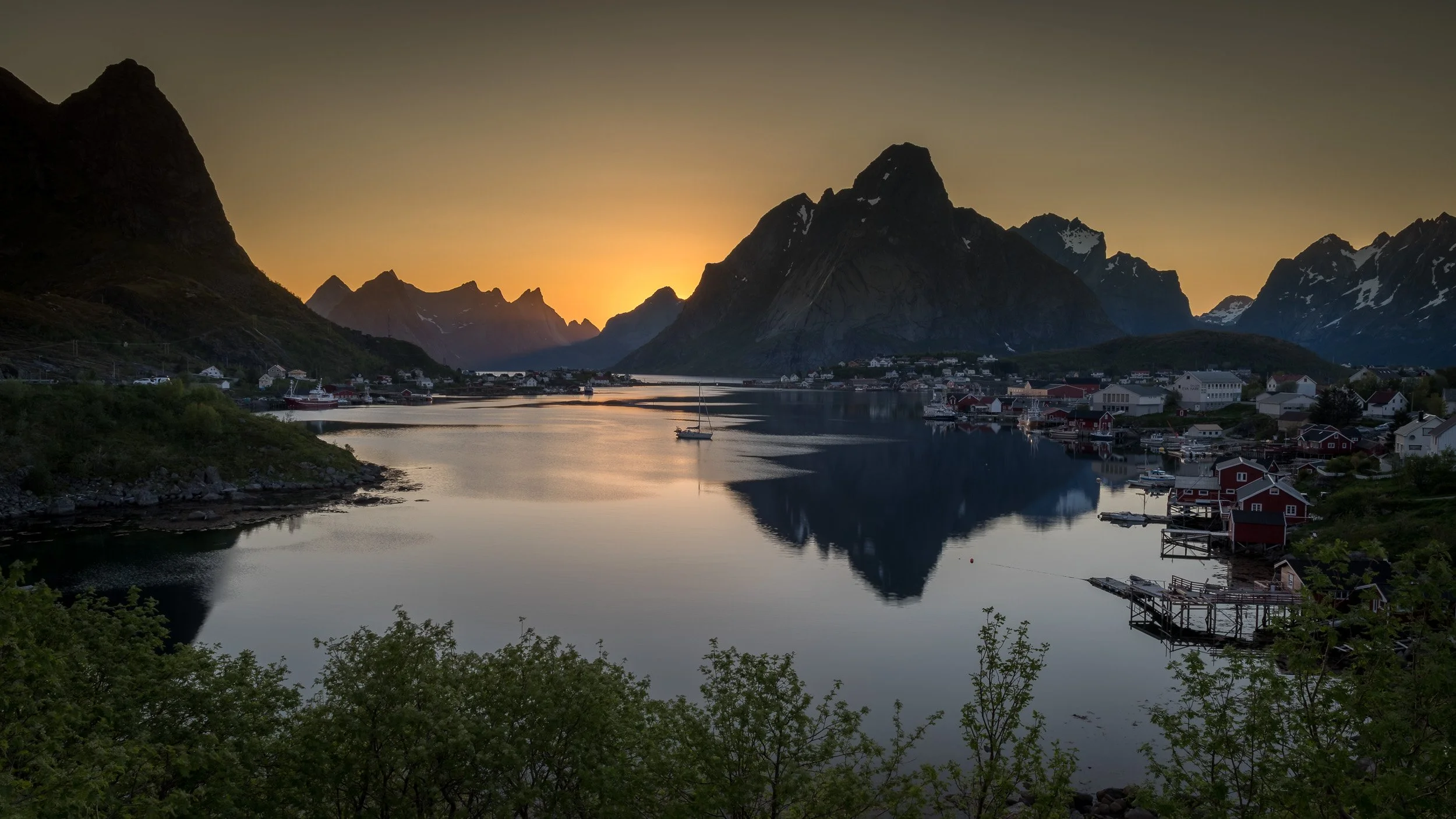
Midnight sun in Reine, Lofoten Islands, Norway – low Arctic sun glowing over the fjord and mountain peaks at night.
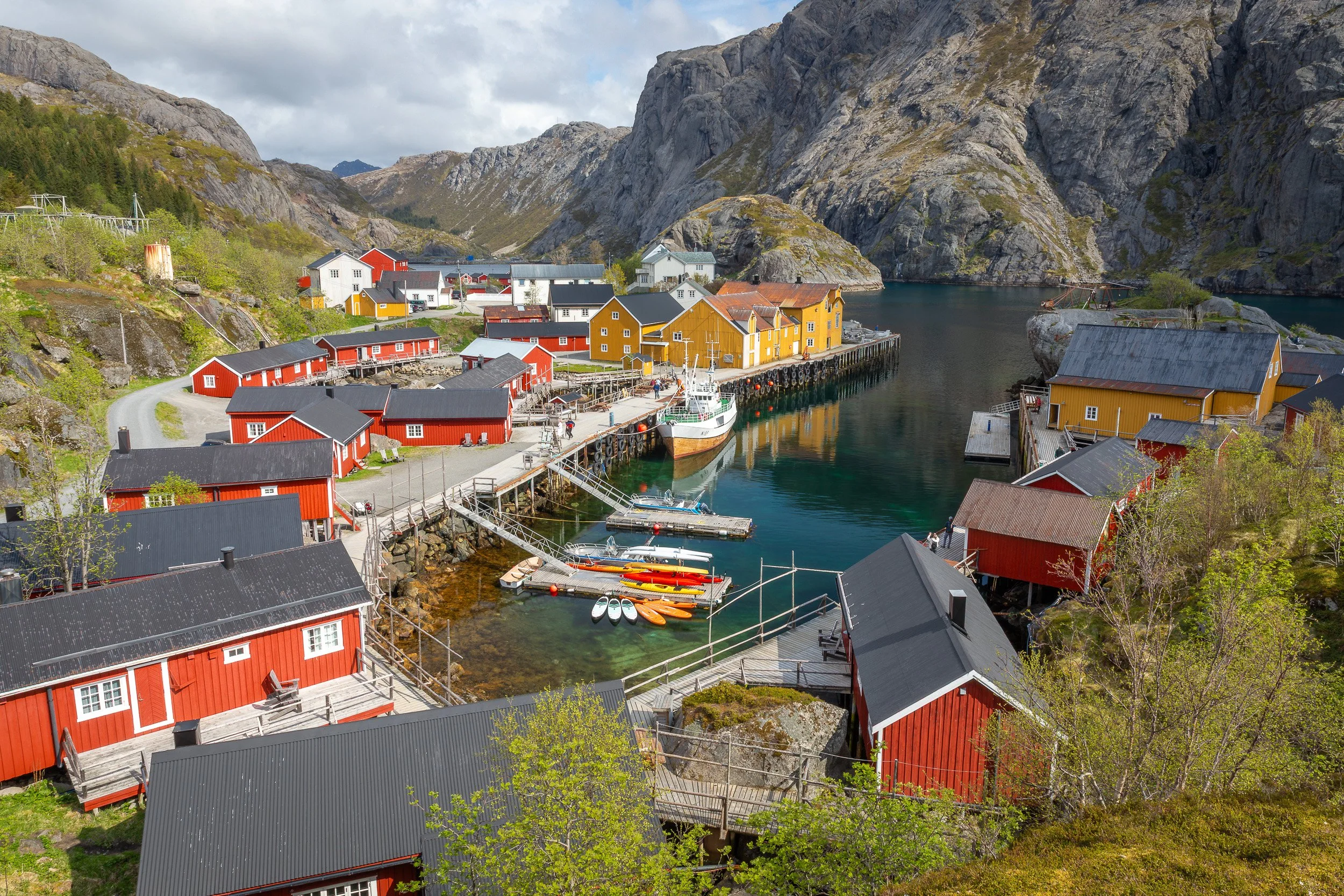
Fisherman’s cabins in Nusfjord, Lofoten Islands, Norway – yellow and red houses clustered around a sheltered fjord.
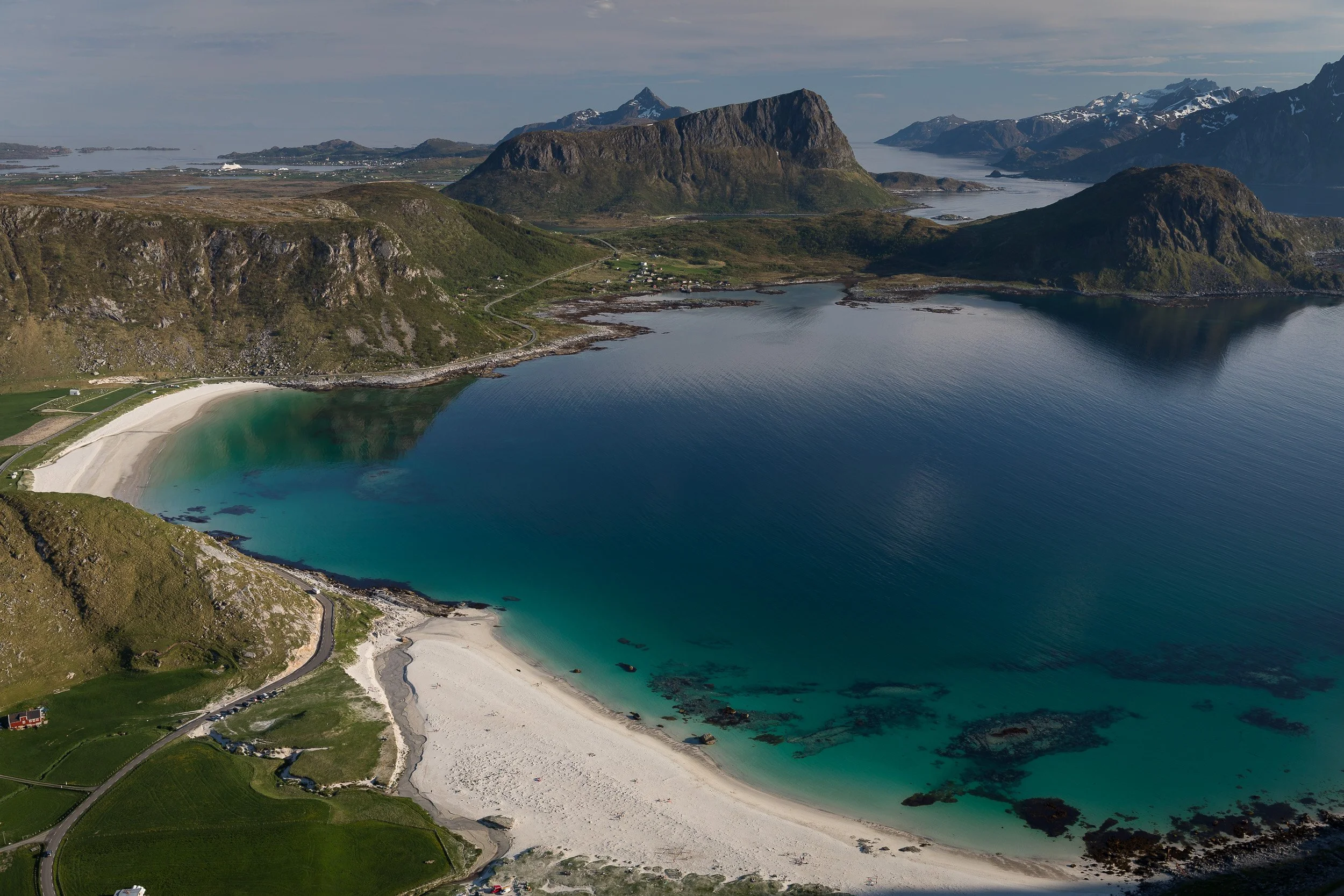
Haukland Beach in the Lofoten Islands, Norway – white sand and turquoise bay framed by rounded coastal mountains.
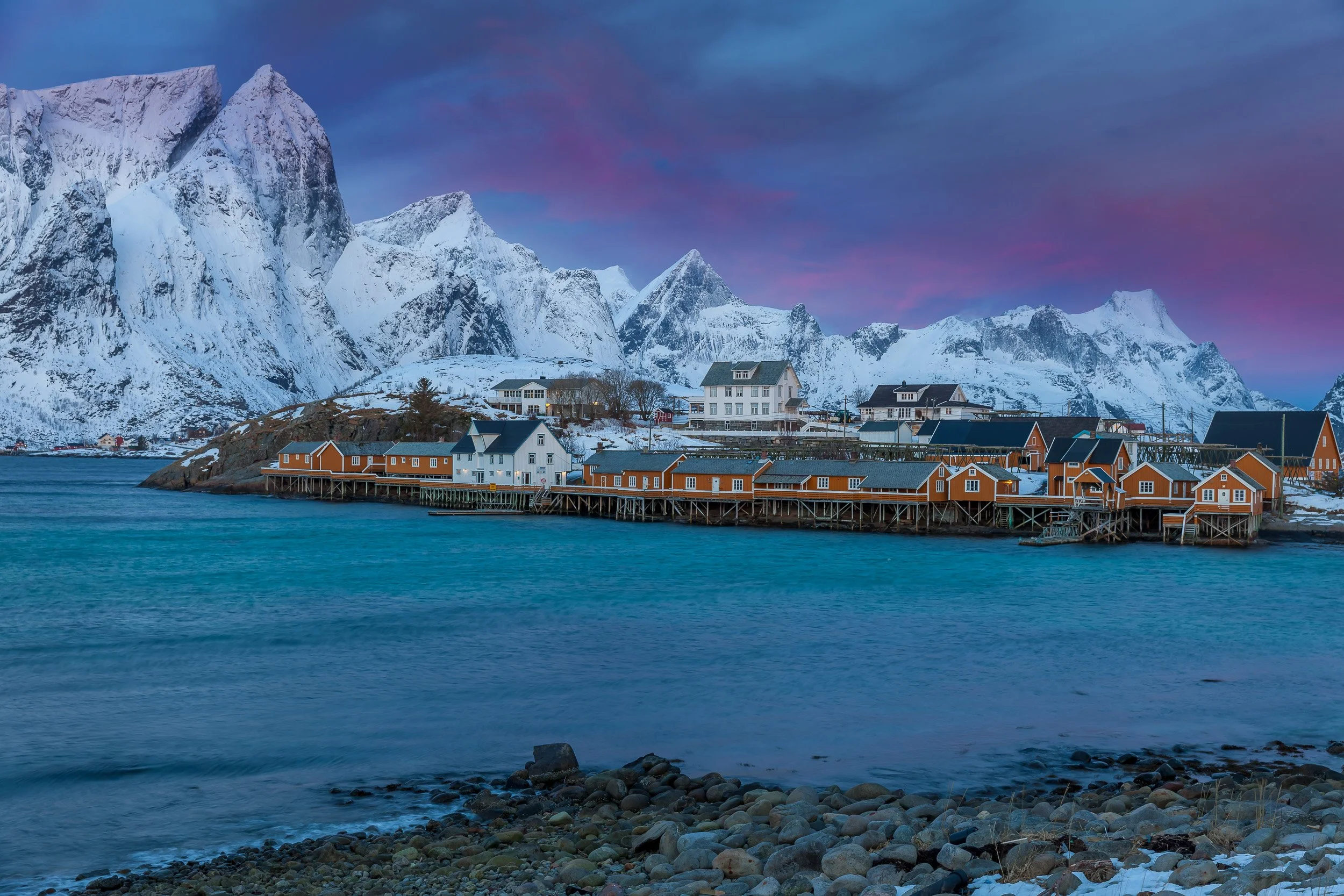
Early sunrise at Sakrisøy in the Lofoten Islands, Norway – soft pastel light over yellow houses, bridges and surrounding peaks.
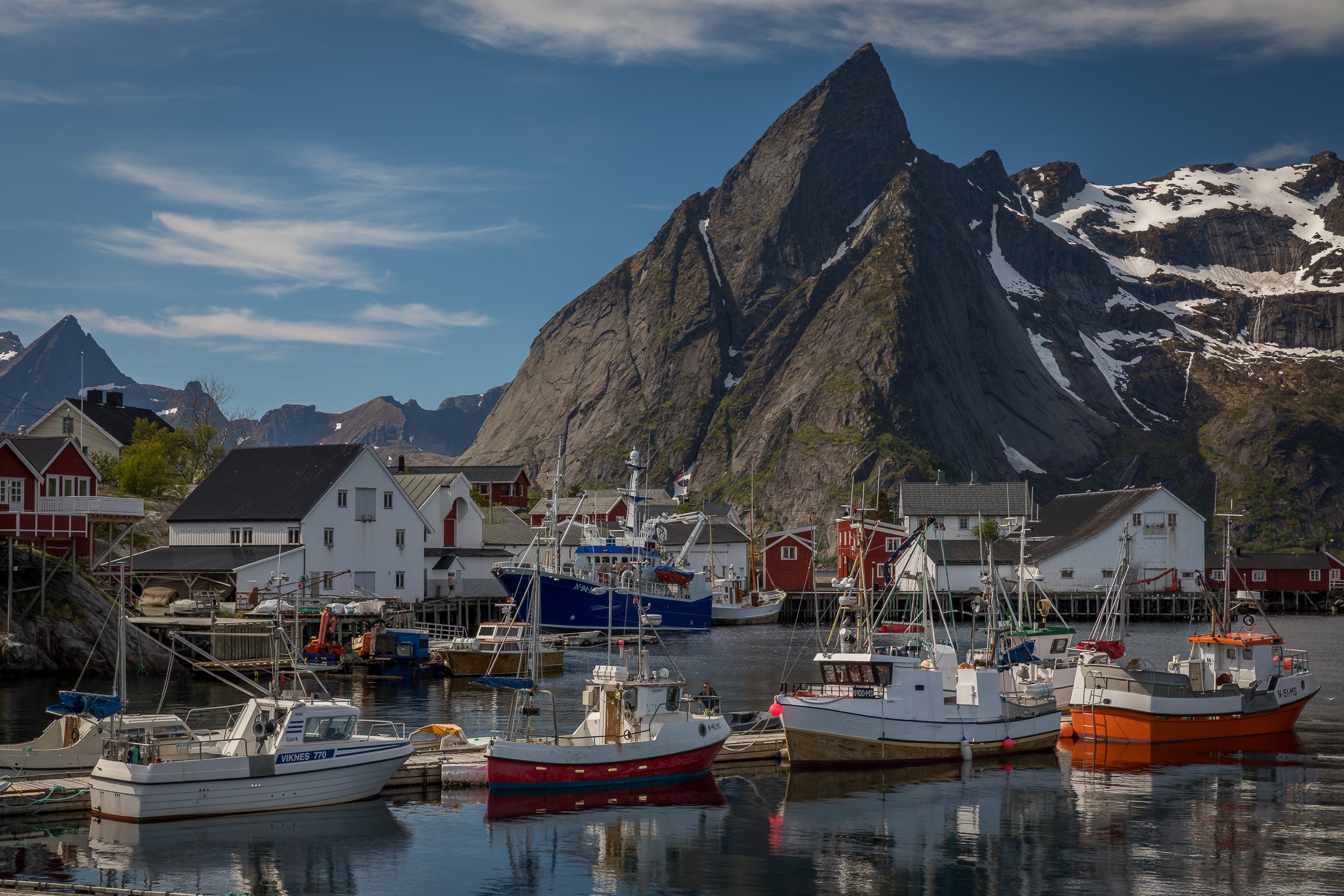
Hamnøy in the Lofoten Islands, Norway – red fishing cabins beneath jagged peaks in one of Lofoten’s most recognisable village settings.
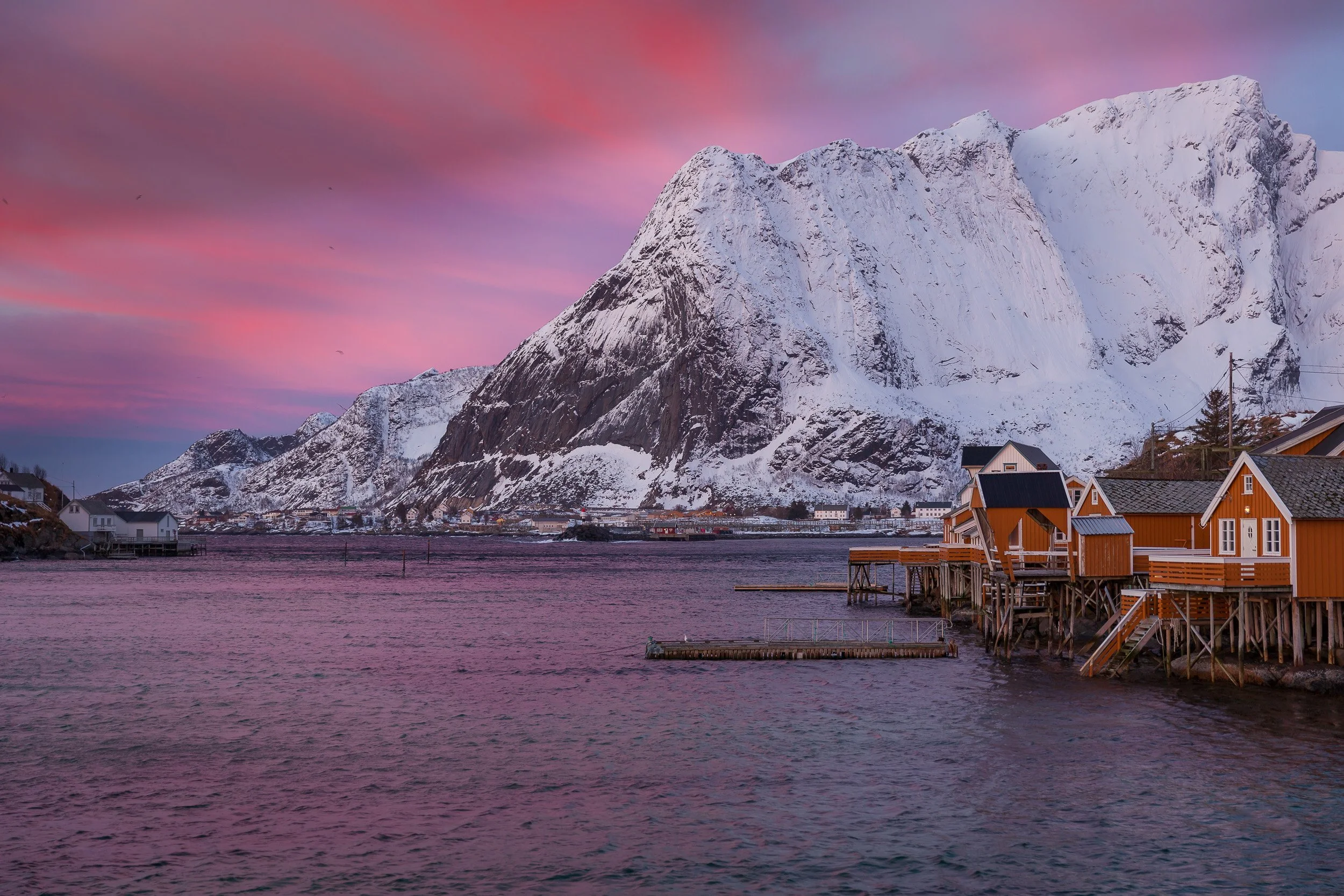
Sunrise in Reine, Lofoten Islands, Norway – golden light on red cabins, calm water and sharp mountain silhouettes.
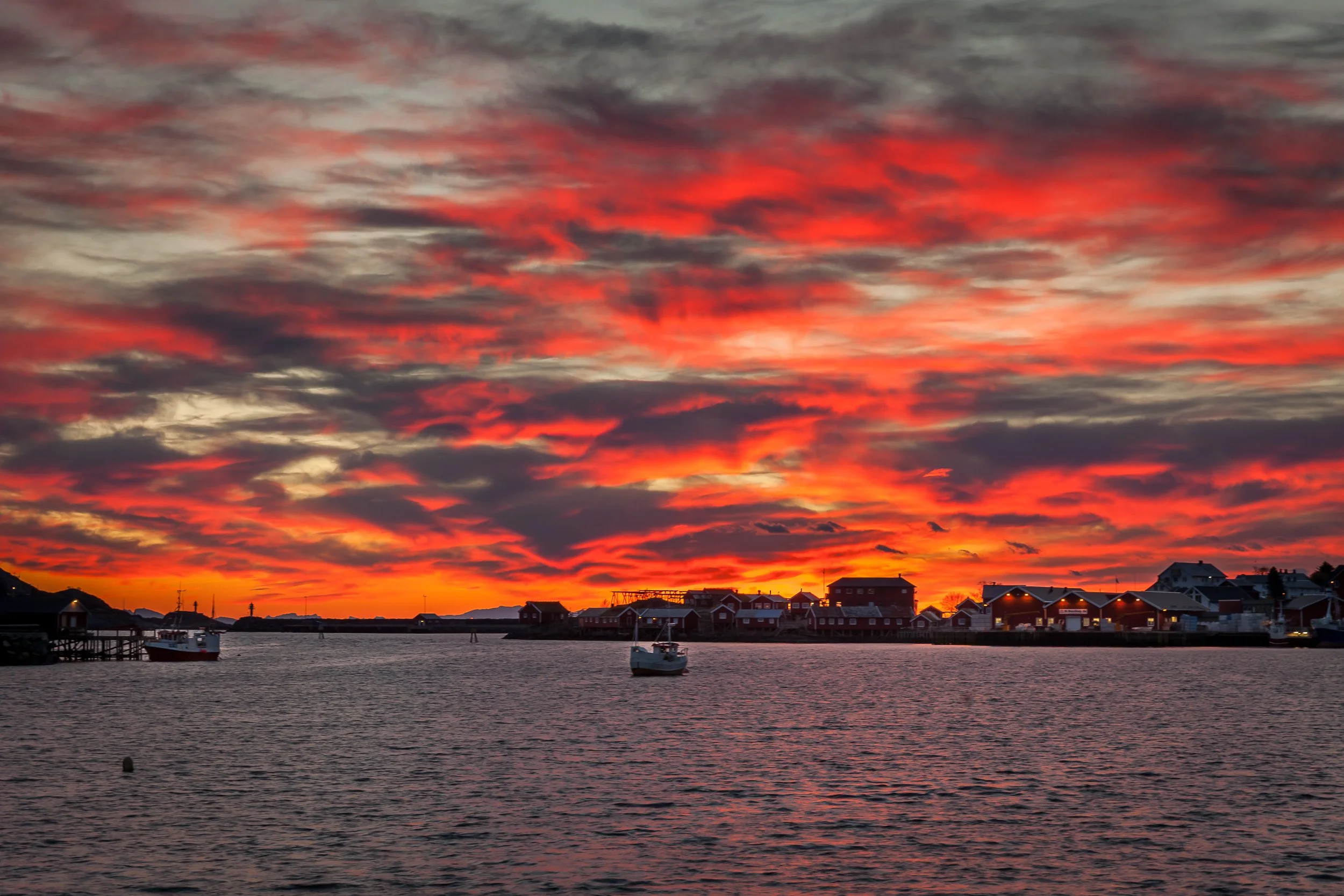
Sunrise in Reine, Lofoten Islands, Norway – pastel morning colours over the harbour, boats and surrounding peaks.
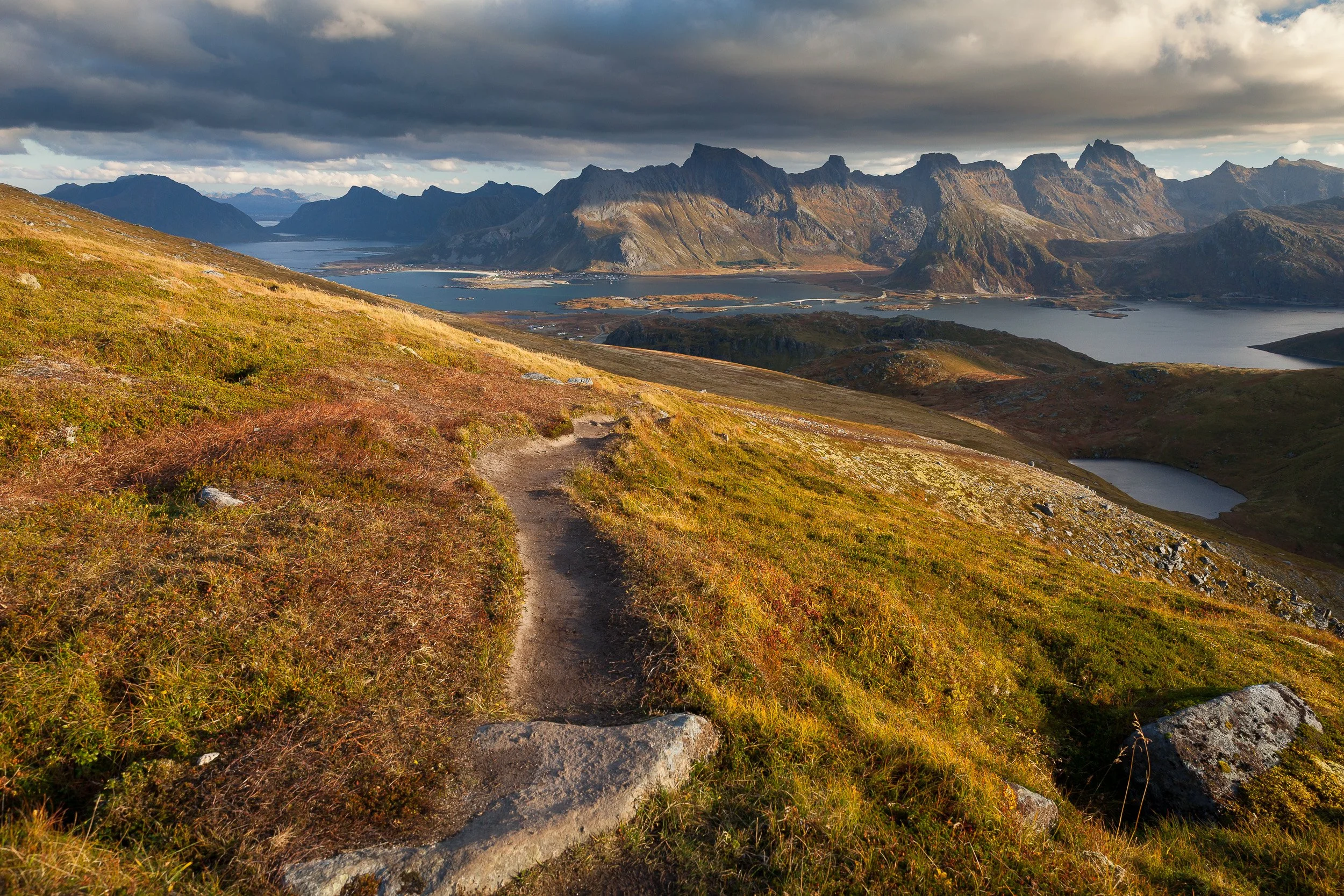
View from Ryten in the Lofoten Islands, Norway – a cliffside trail above beaches, open sea and surrounding mountains.
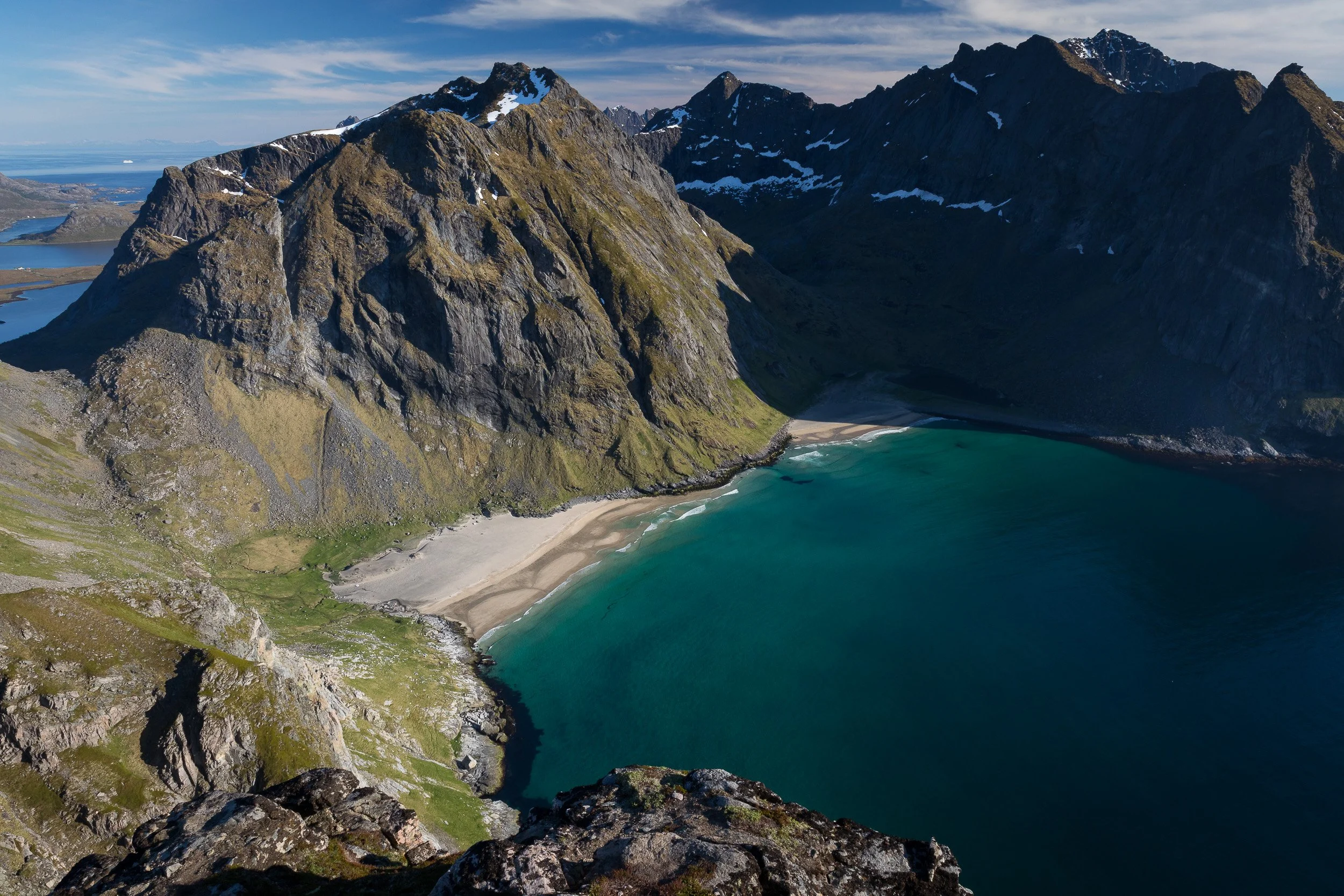
Kvalvika Beach in the Lofoten Islands, Norway – golden sand and surf framed by high cliffs on the wild Atlantic side.
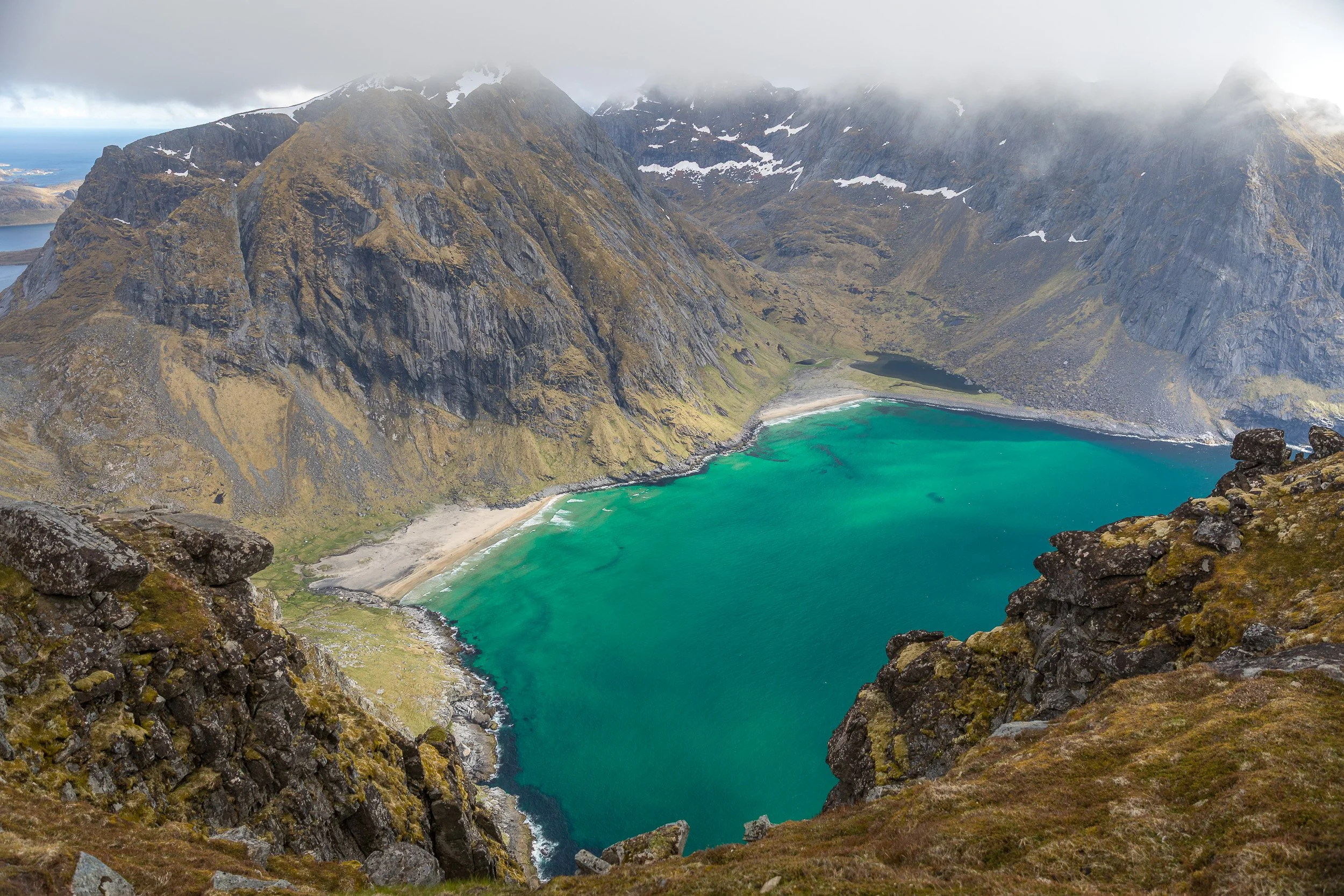
Kvalvika Beach in the Lofoten Islands, Norway – wild Atlantic-facing beach reached only by hiking over the mountains.
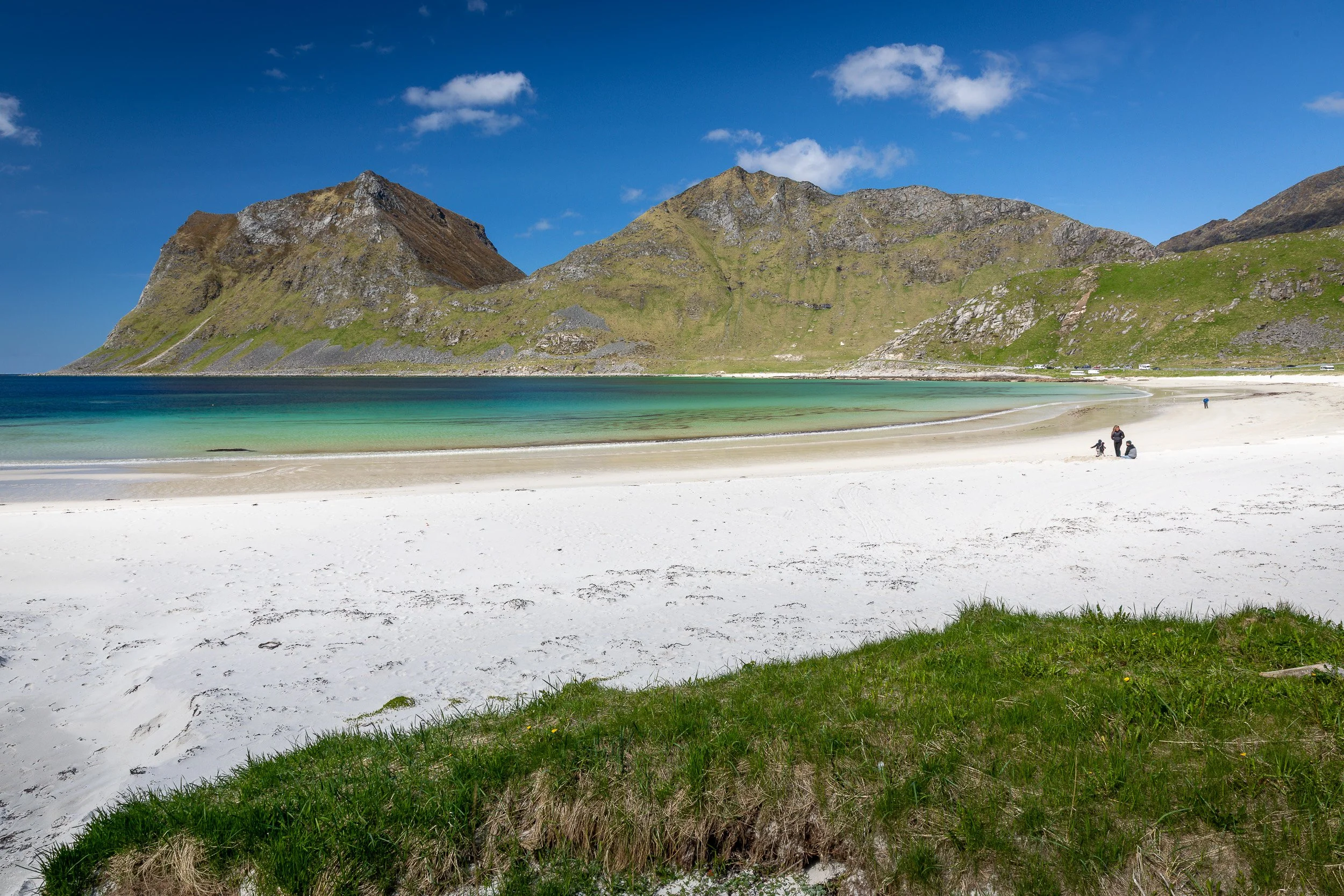
Haukland Beach in the Lofoten Islands, Norway – gentle waves, a curved bay and soft sand below rounded coastal hills.
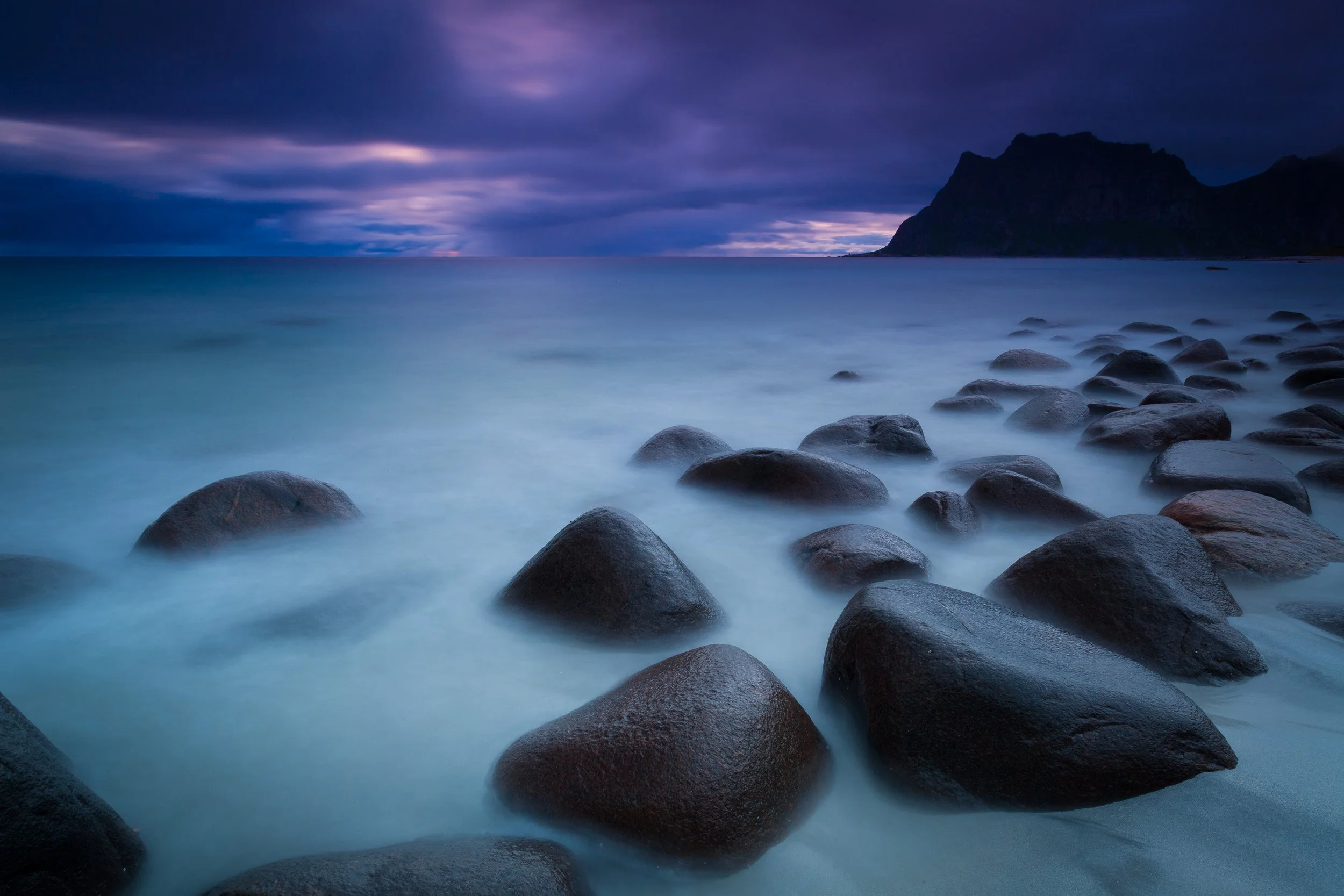
Utakleiv Beach in the Lofoten Islands, Norway – rocky shoreline, smooth boulders and open view to the Norwegian Sea.
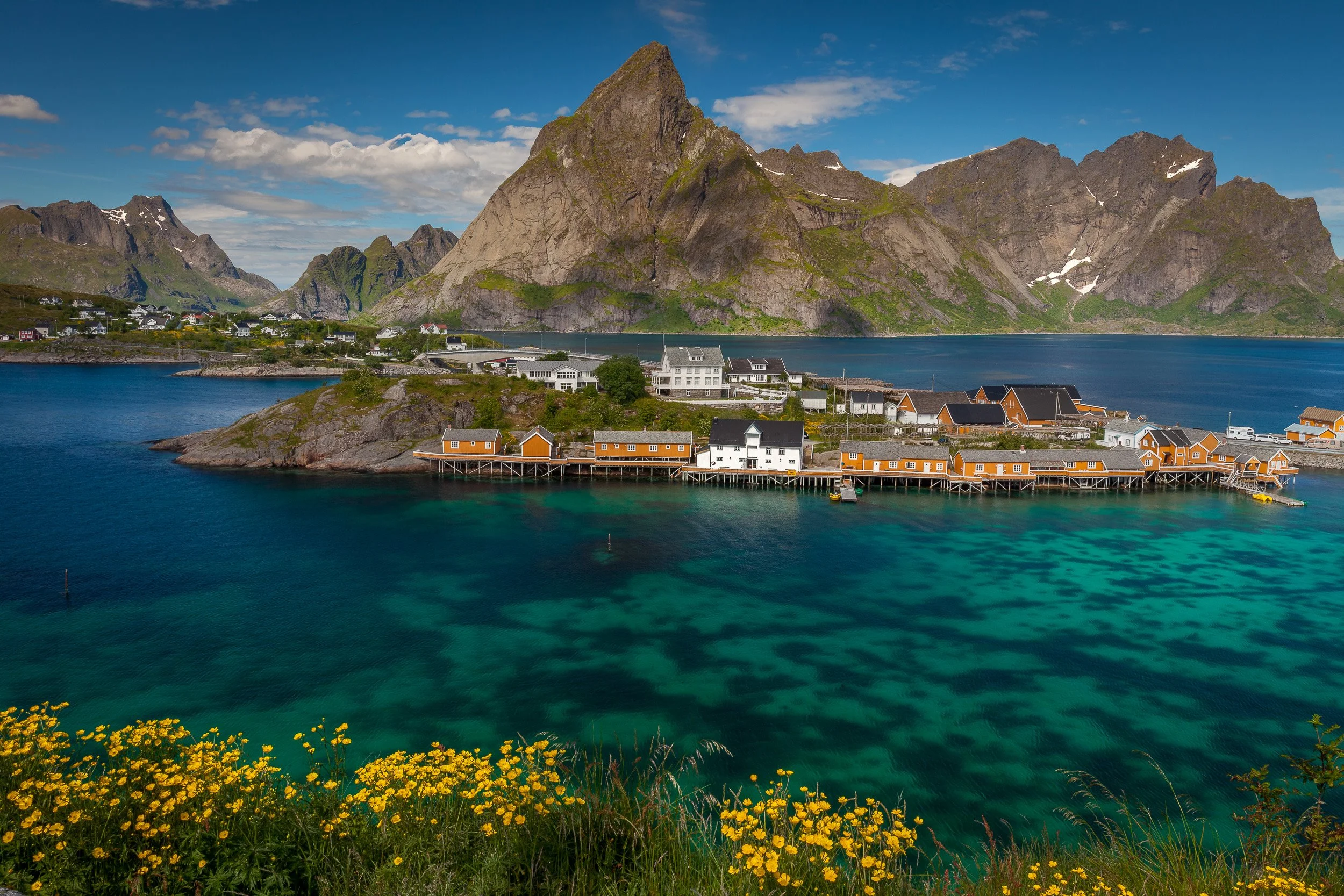
Sakrisøy fishing village in the Lofoten Islands, Norway – yellow cabins on stilts between turquoise water and steep mountain peaks. Related film opens on YouTube.
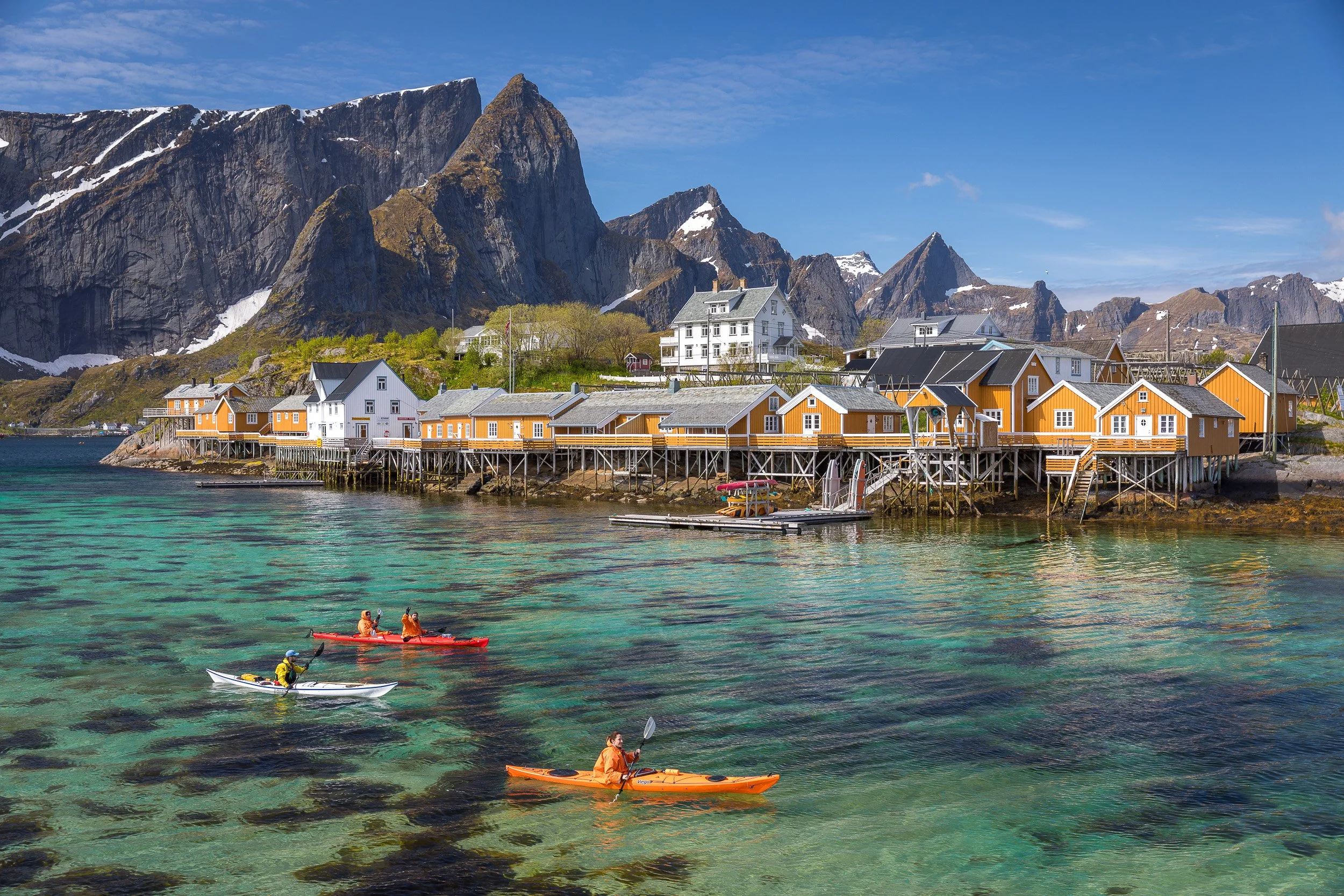
Sakrisøy in the Lofoten Islands, Norway – small island community with bright yellow houses and clear emerald water.
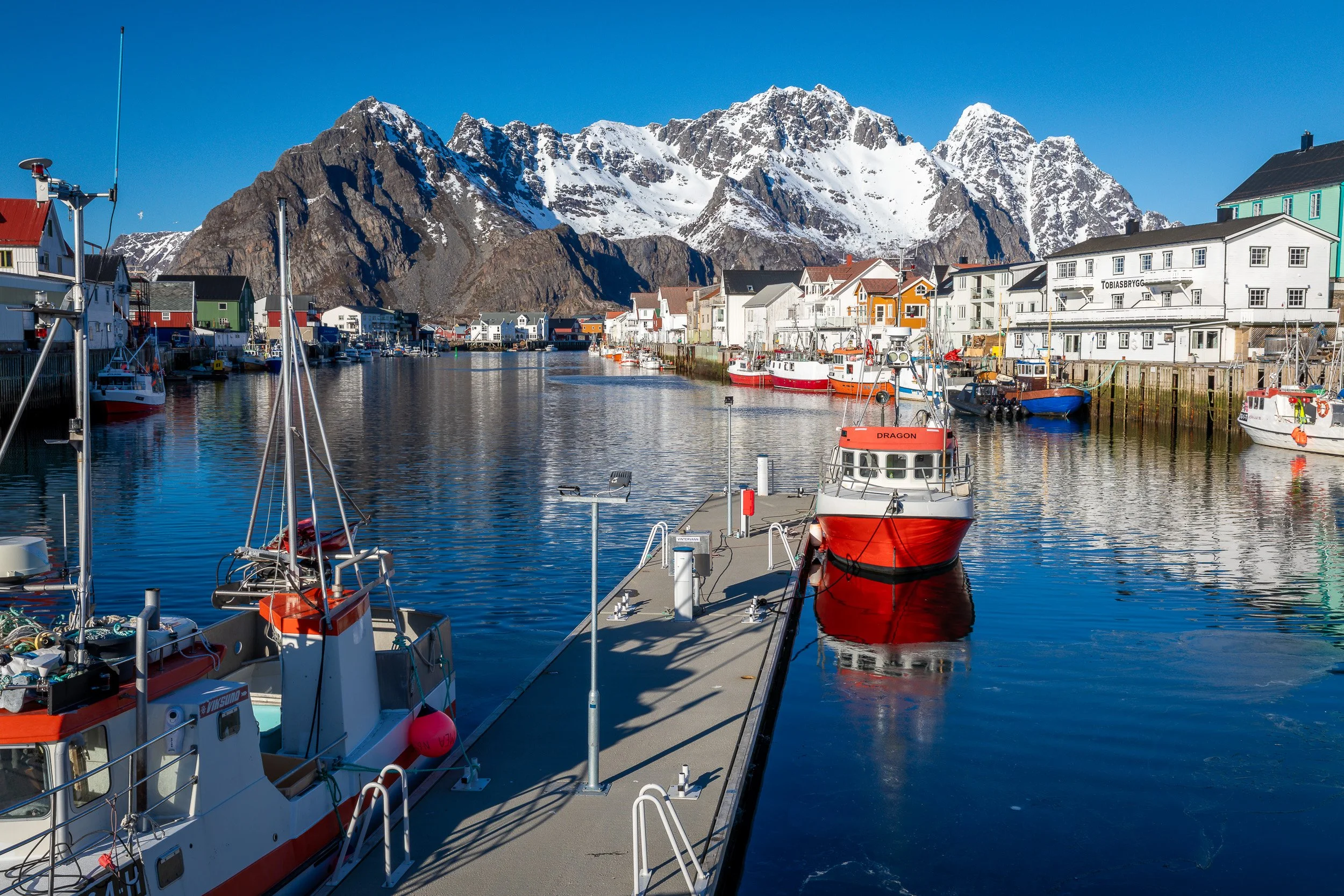
Henningsvær fishing village in the Lofoten Islands, Norway – narrow islands, harbour and football pitch surrounded by open sea.
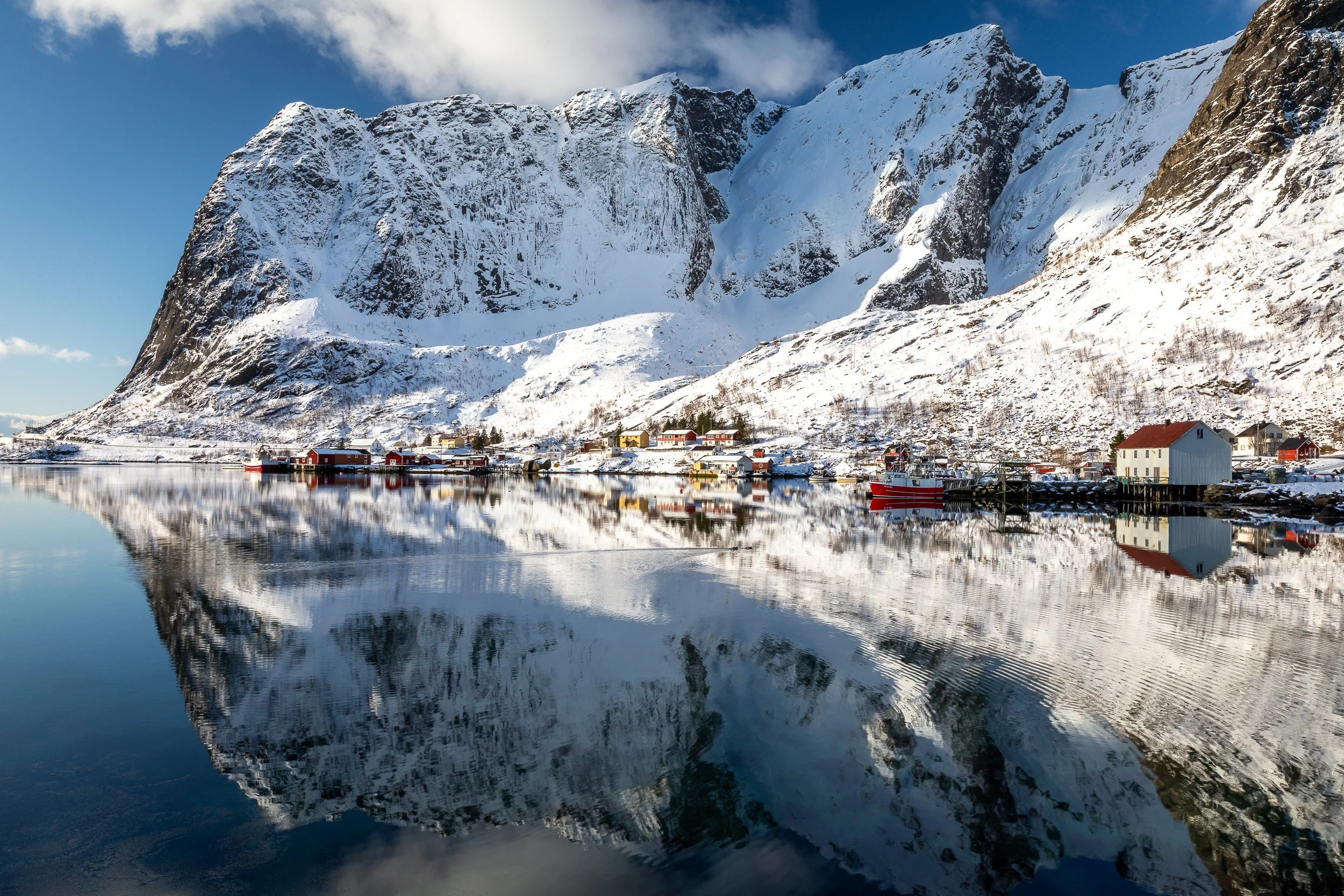
Mount Reinebringen in the Lofoten Islands, Norway – a steep summit rising directly above the fjord near Reine.
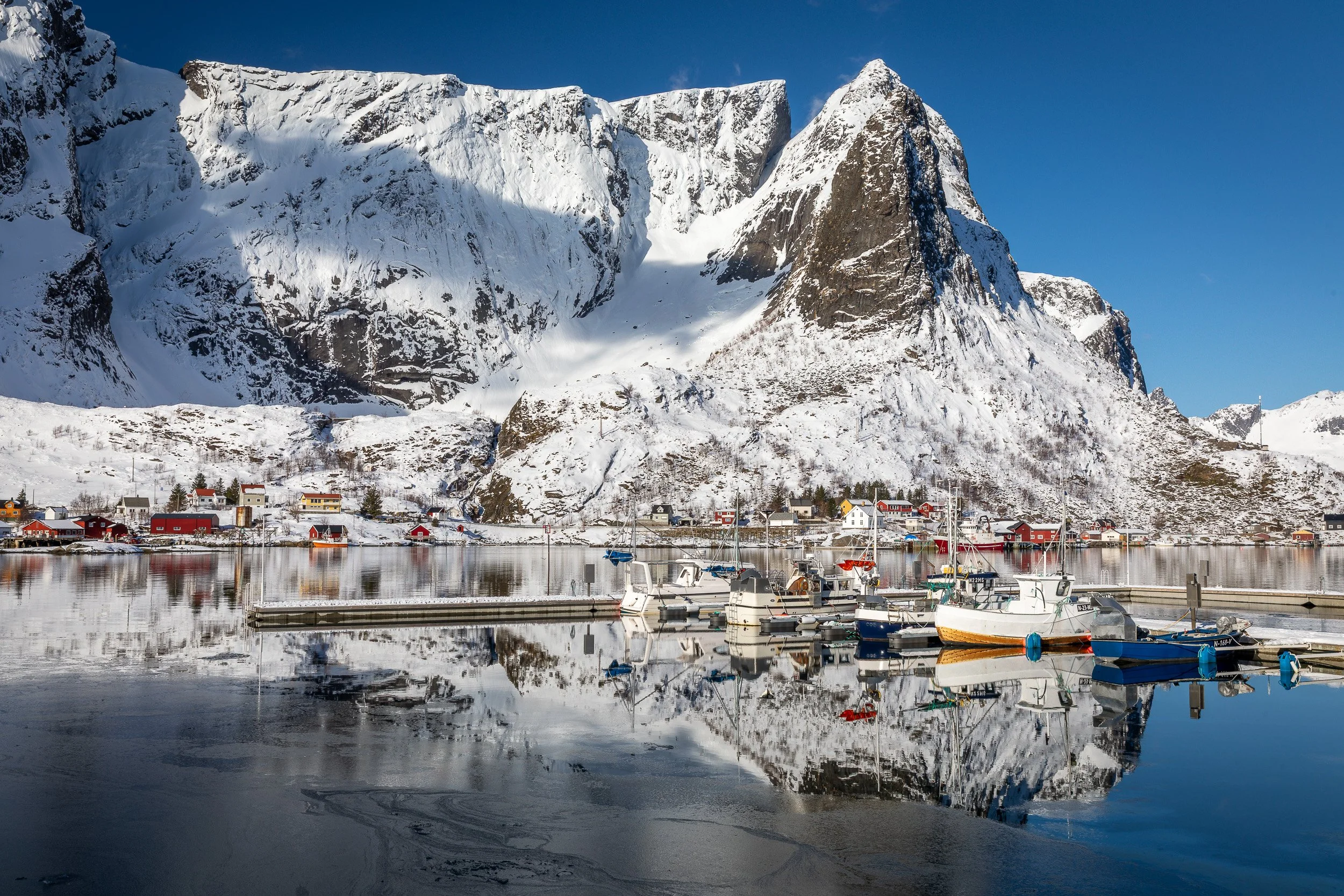
Reine, Lofoten Islands, Norway – red fishing cabins and towering granite peaks around one of Lofoten’s classic fjord views.
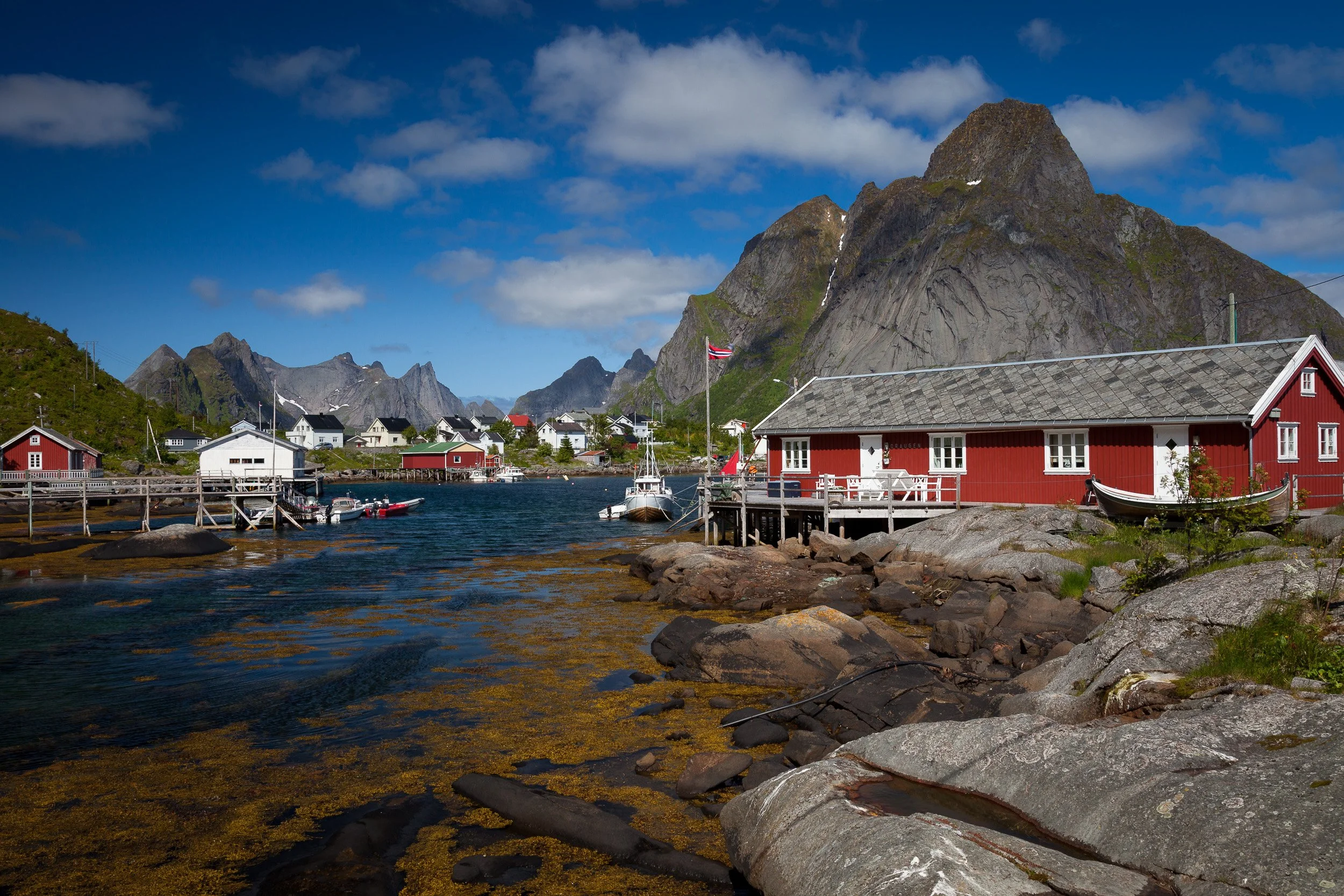
Fisherman’s cabins in Reine, Lofoten Islands, Norway – row of red rorbuer along the shoreline beneath the Lofoten wall.
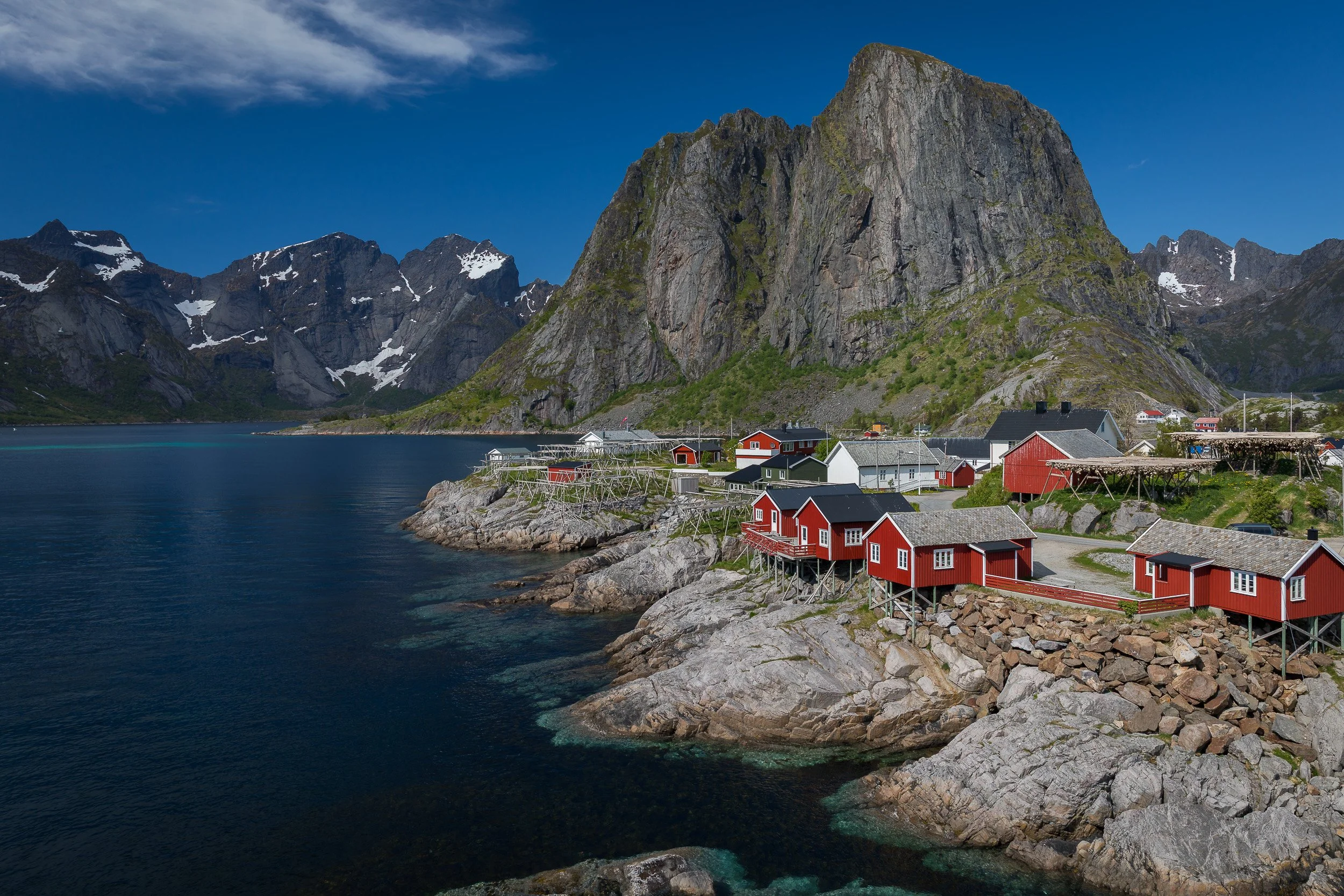
Fisherman’s cabins at Hamnøy, Lofoten Islands, Norway – classic red rorbuer on stilts beneath steep cliffs and a narrow bridge.
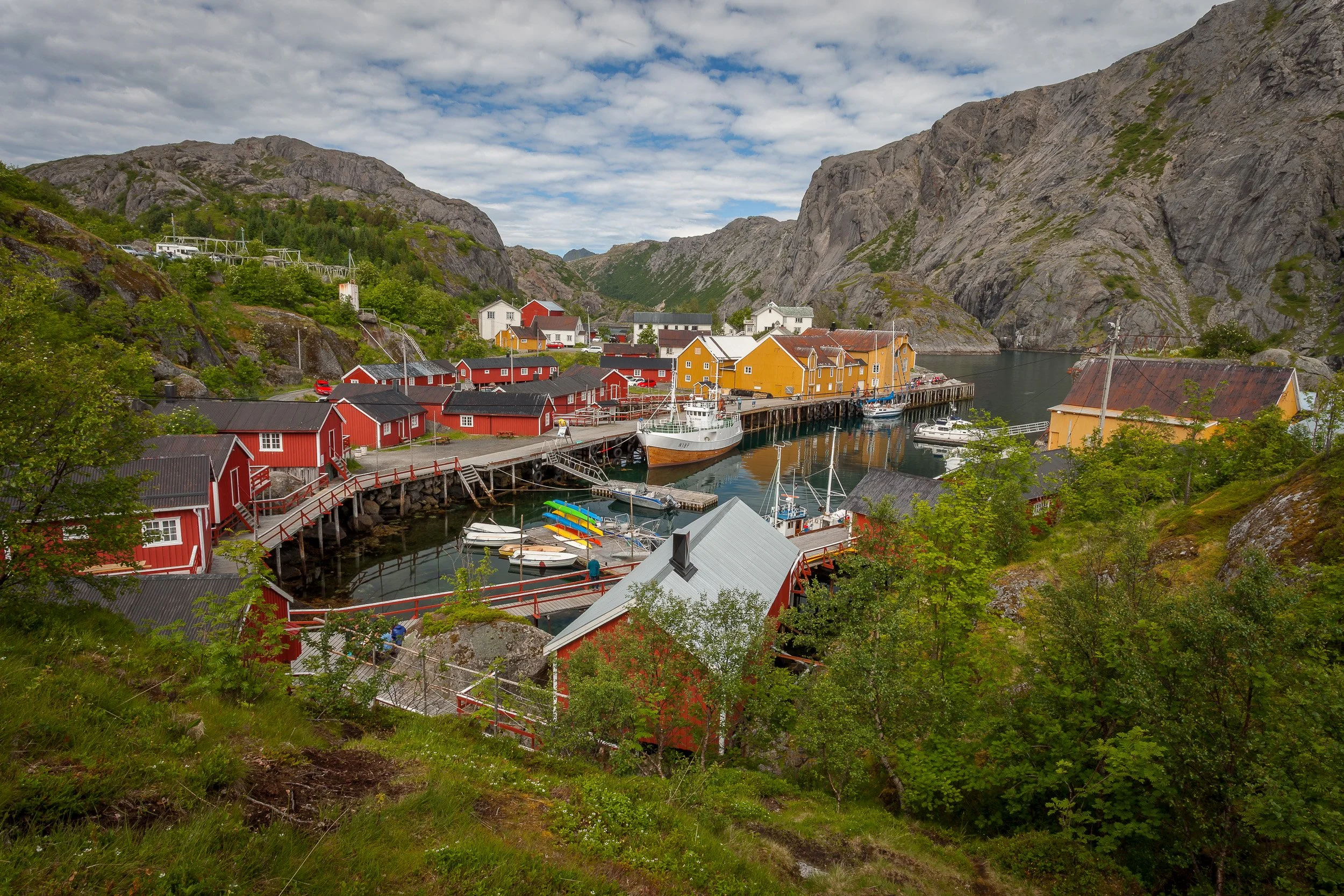
Fisherman’s cabins in Nusfjord, Lofoten Islands, Norway – historic red rorbuer clustered around a sheltered harbour.
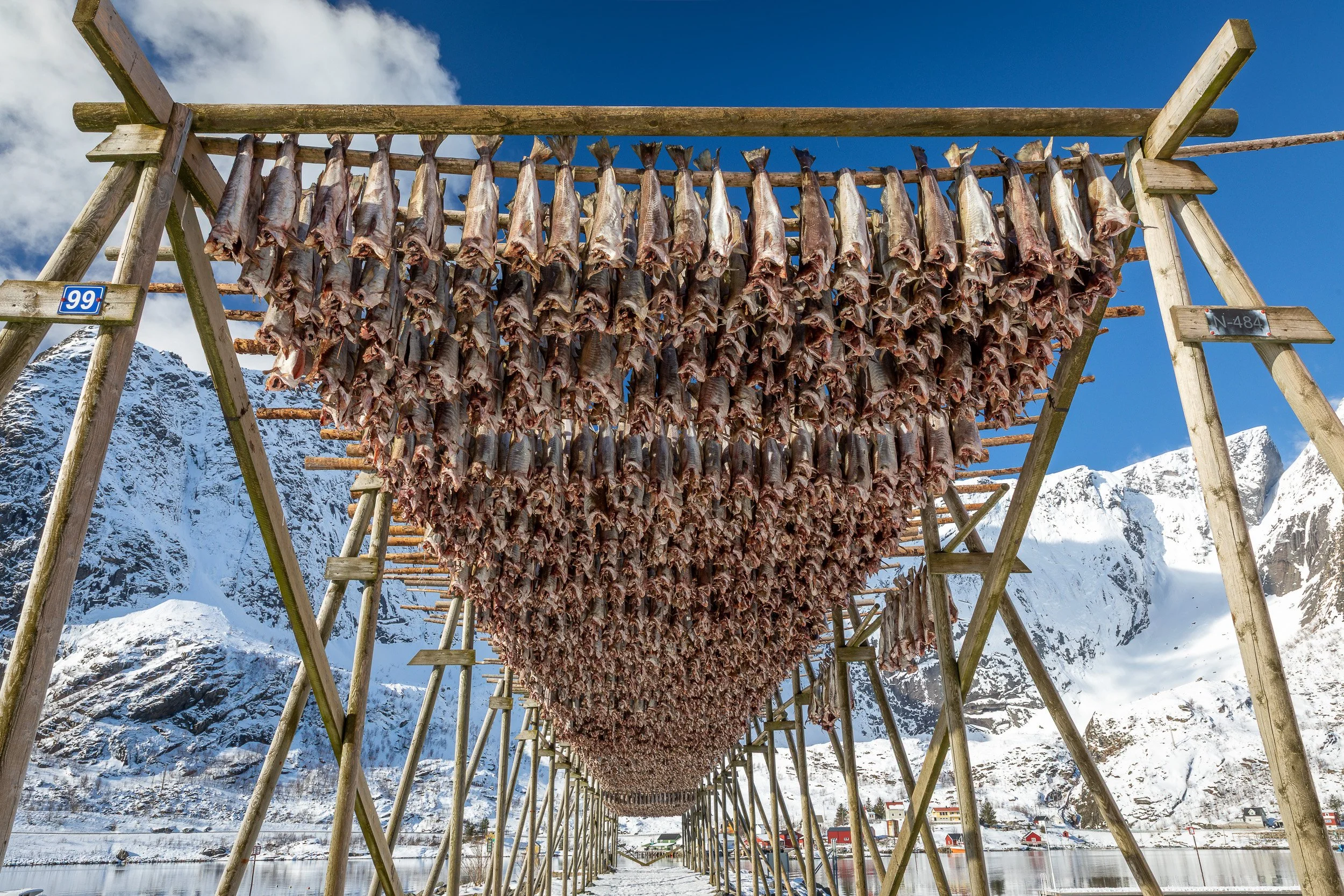
Fish racks with dried cod in Reine, Lofoten Islands, Norway – traditional stockfish hanging beneath dramatic Arctic peaks.
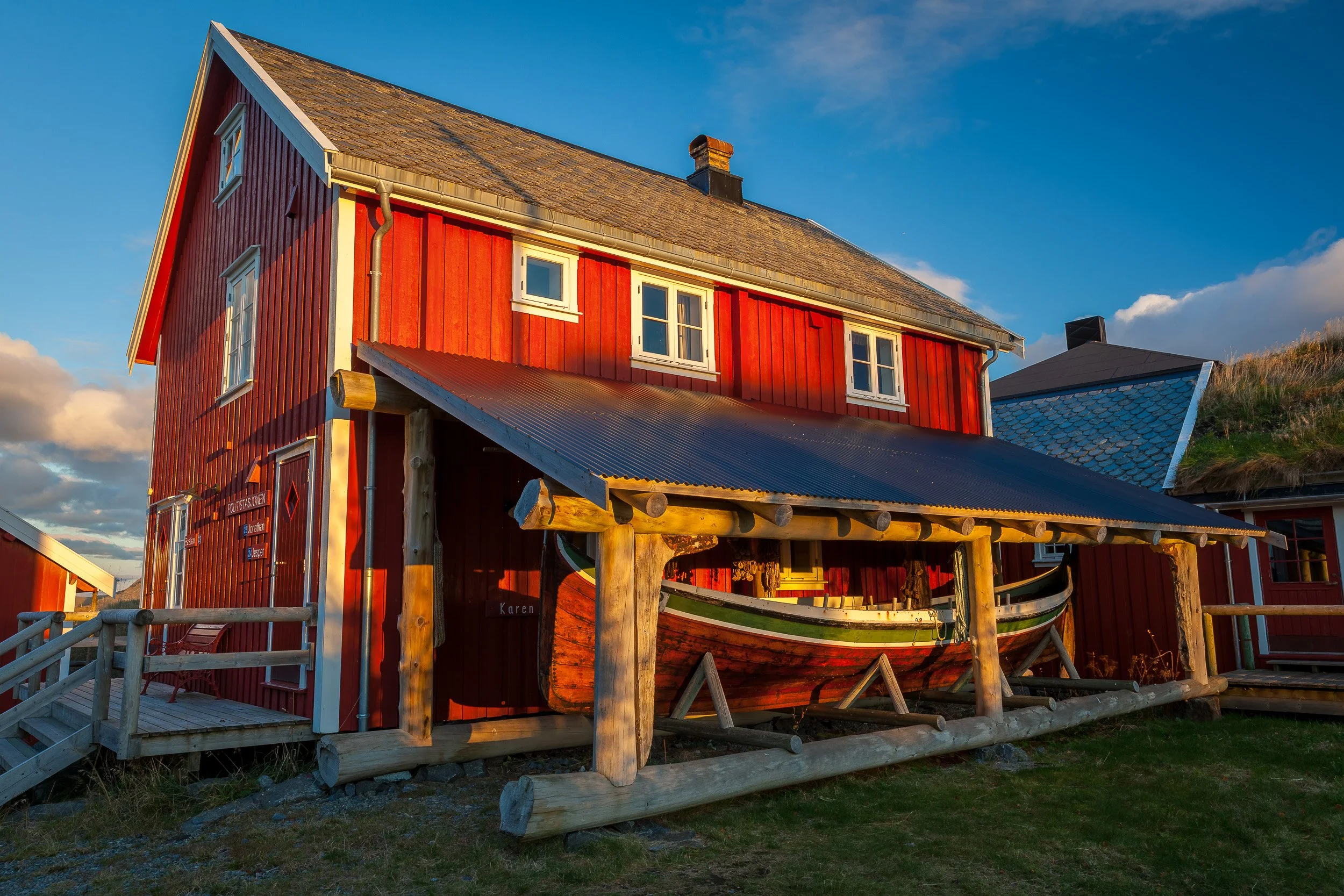
Fisherman’s cabins in Reine, Lofoten Islands, Norway – traditional wooden rorbuer along the fjord beneath steep Arctic mountains.
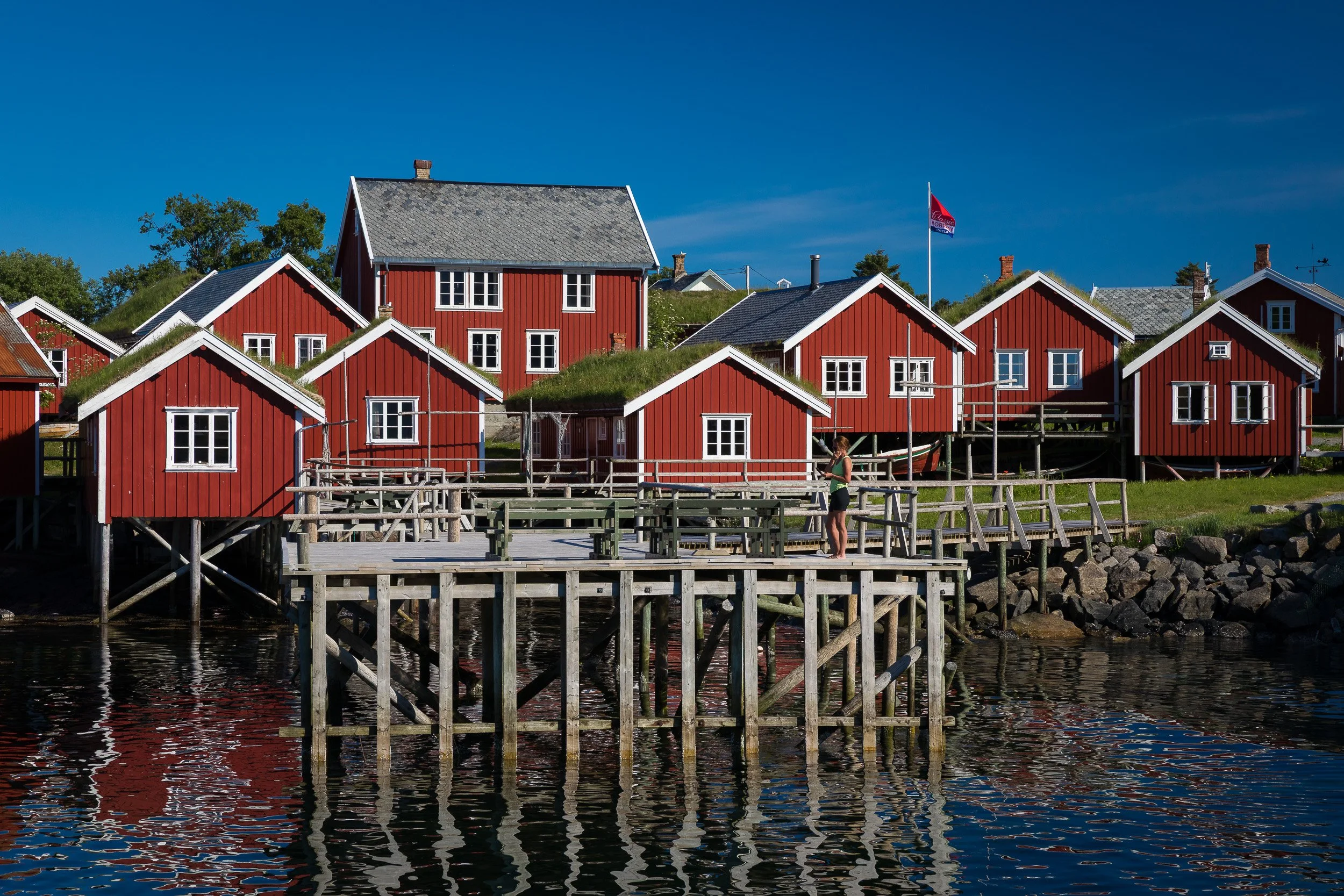
Fisherman’s cabins in Reine, Lofoten Islands, Norway – a colourful harbourfront set against crisp Arctic air and mountain light.
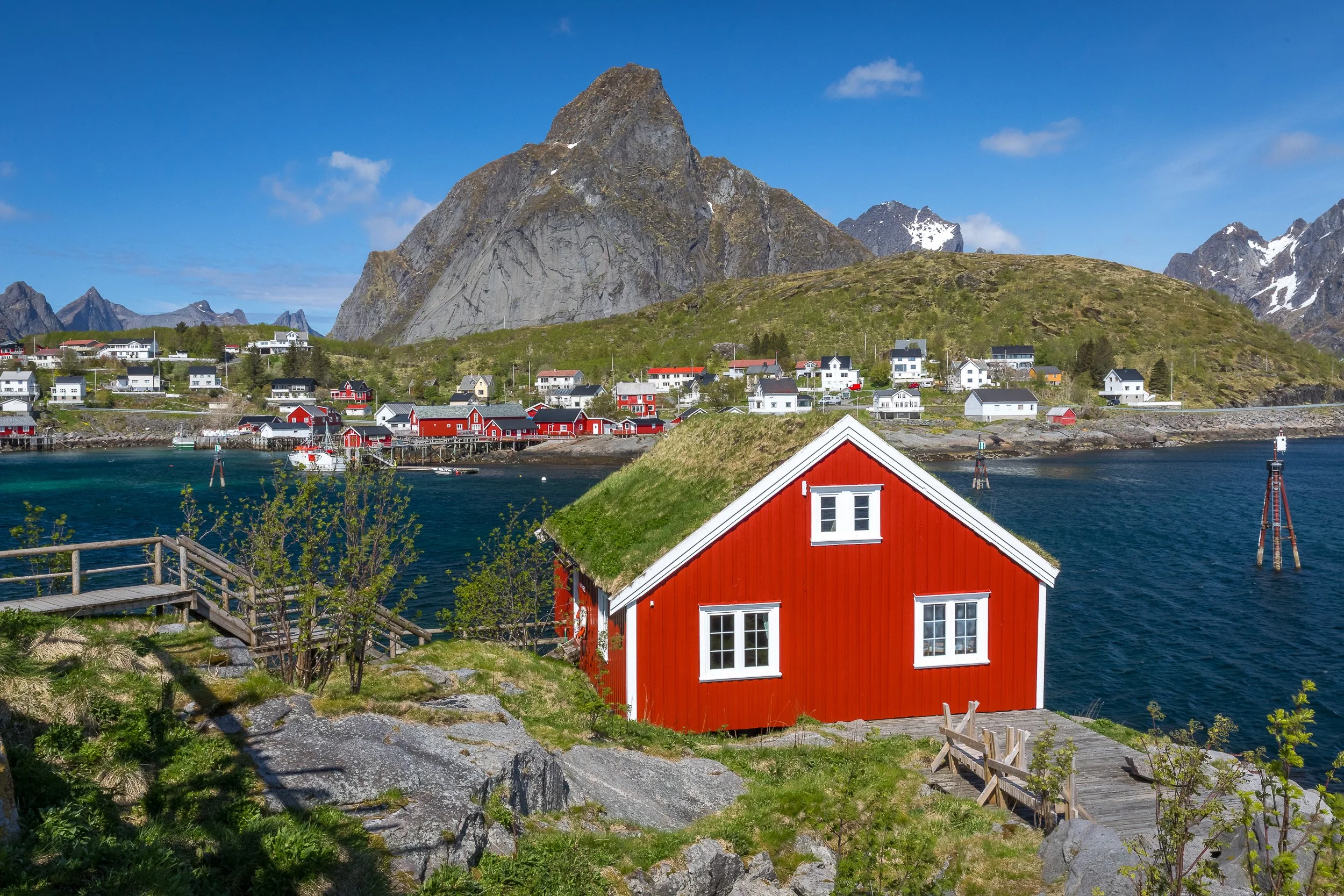
Fisherman’s cabins in Reine, Lofoten Islands, Norway – traditional boathouses and walkways along the edge of the fjord.
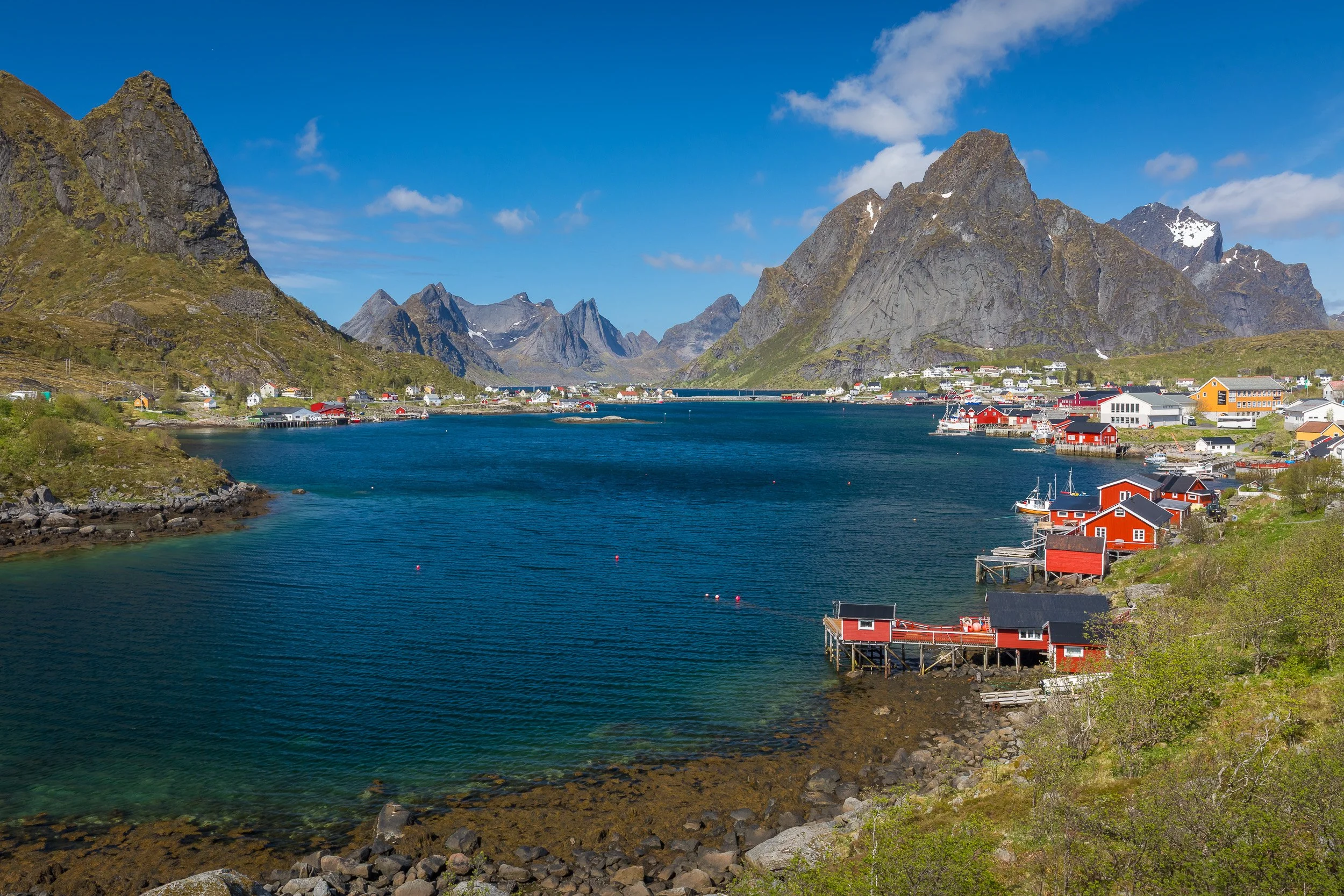
Reine in the Lofoten Islands, Norway – an Arctic seascape of islands, channels and peaks rising from the fjord.
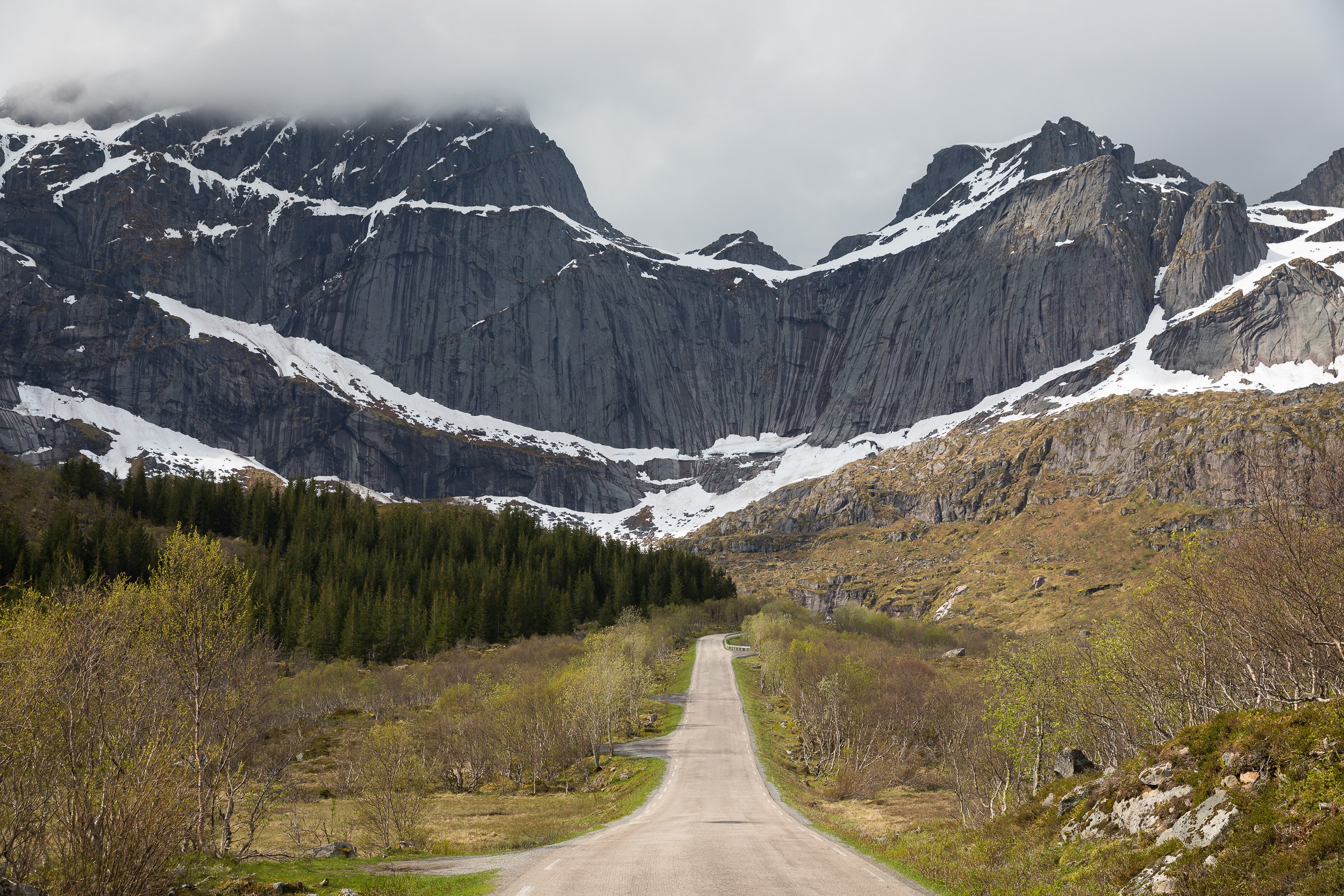
Road to Hell in the Lofoten Islands, Norway – a winding coastal road between steep mountains and the open sea
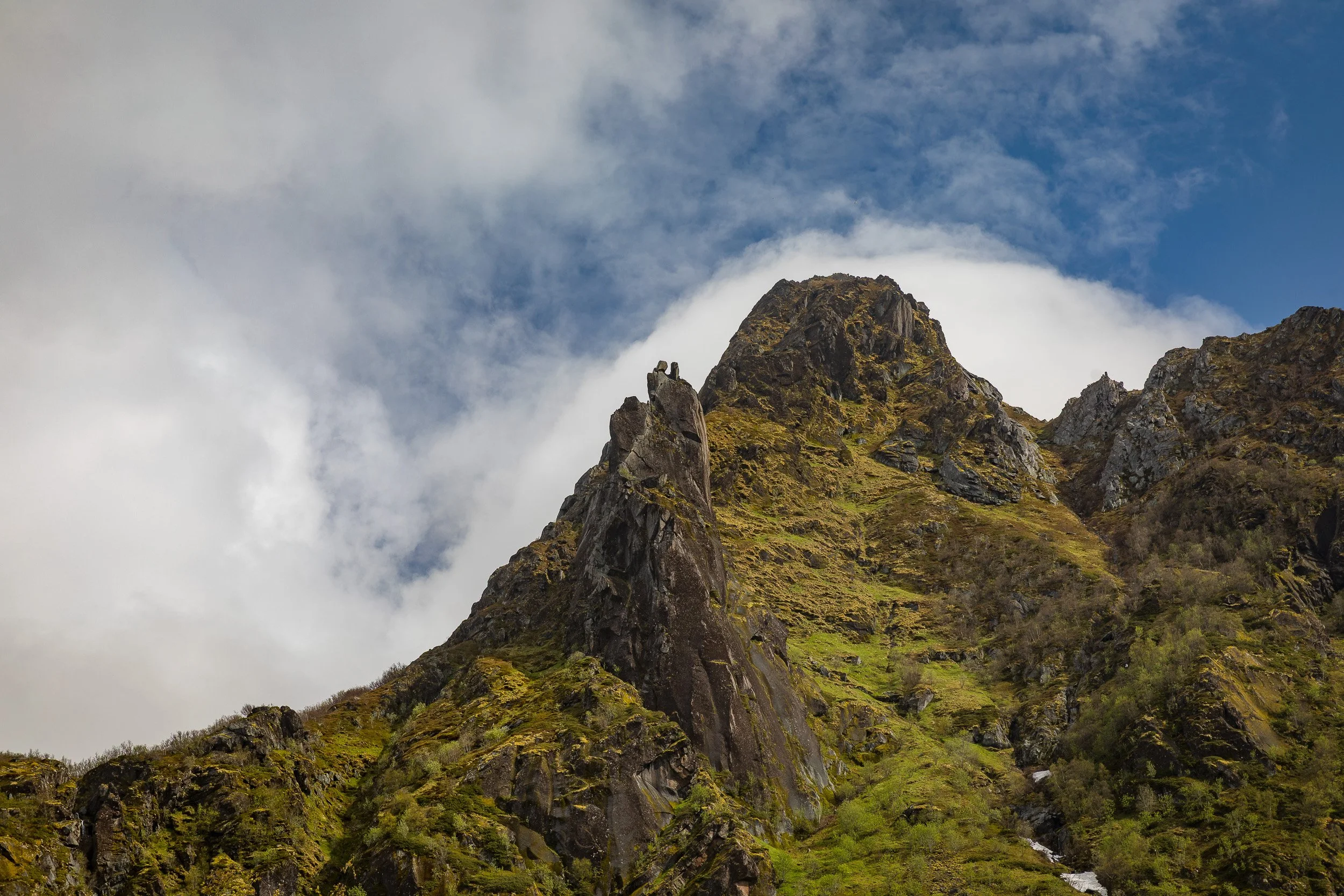
Geita in Svolvær, Lofoten Islands, Norway – a pointed rock formation rising above the harbour and town.
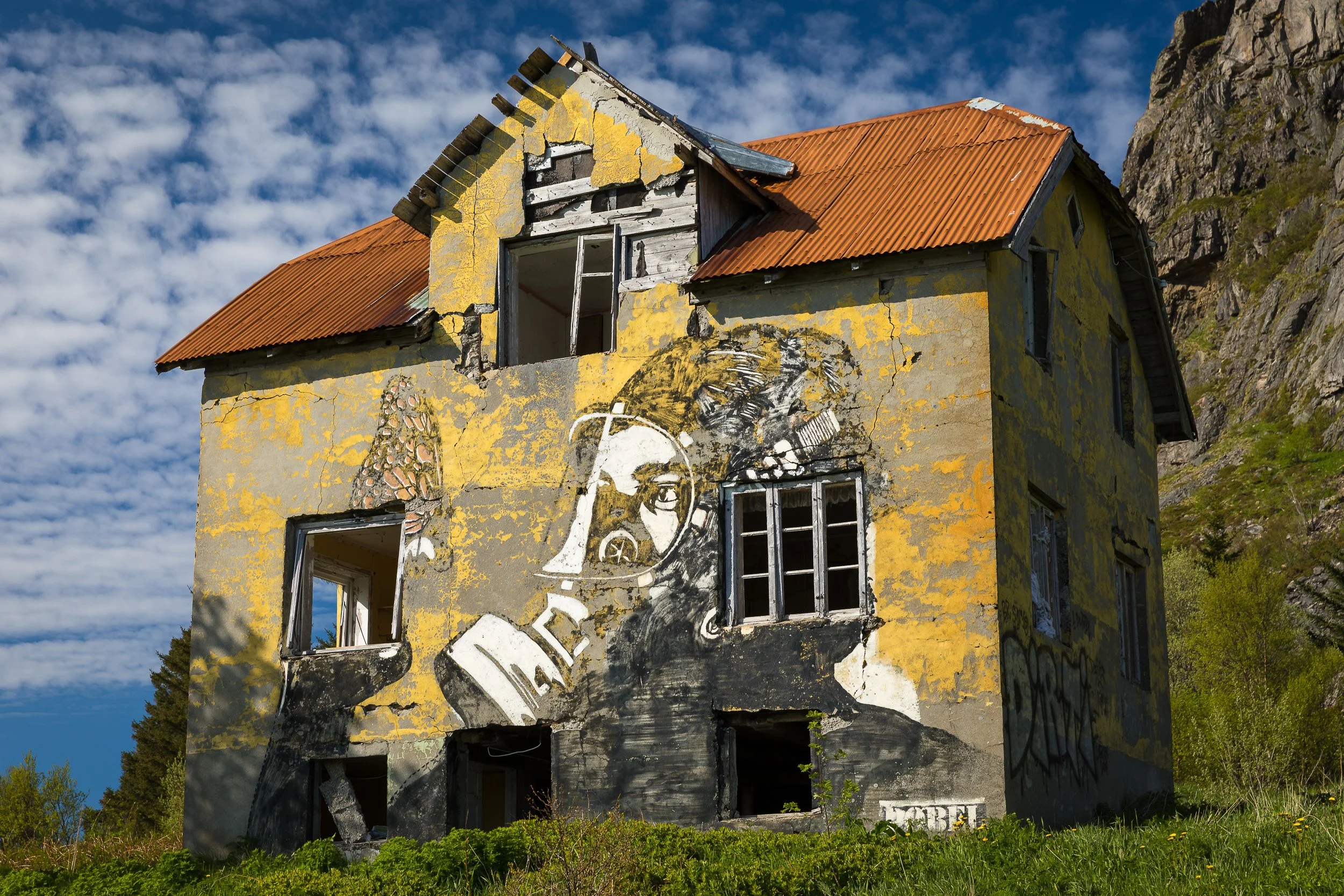
Street art by Pøbel in the Lofoten Islands, Norway – bold stencil art set against the harbour landscape.
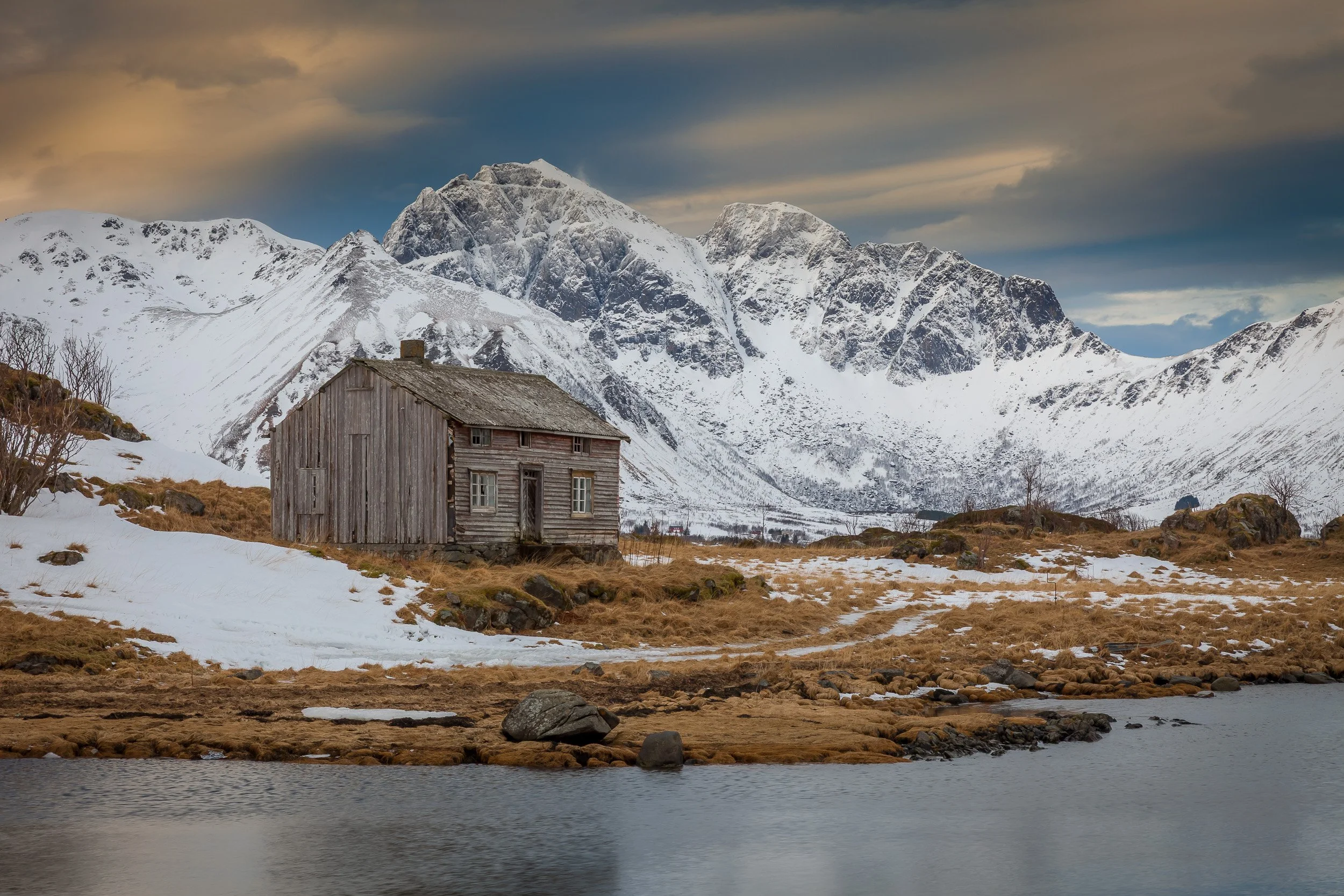
Cabin in the Lofoten Islands, Norway – a small wooden cottage set between rugged mountains and a quiet lake.
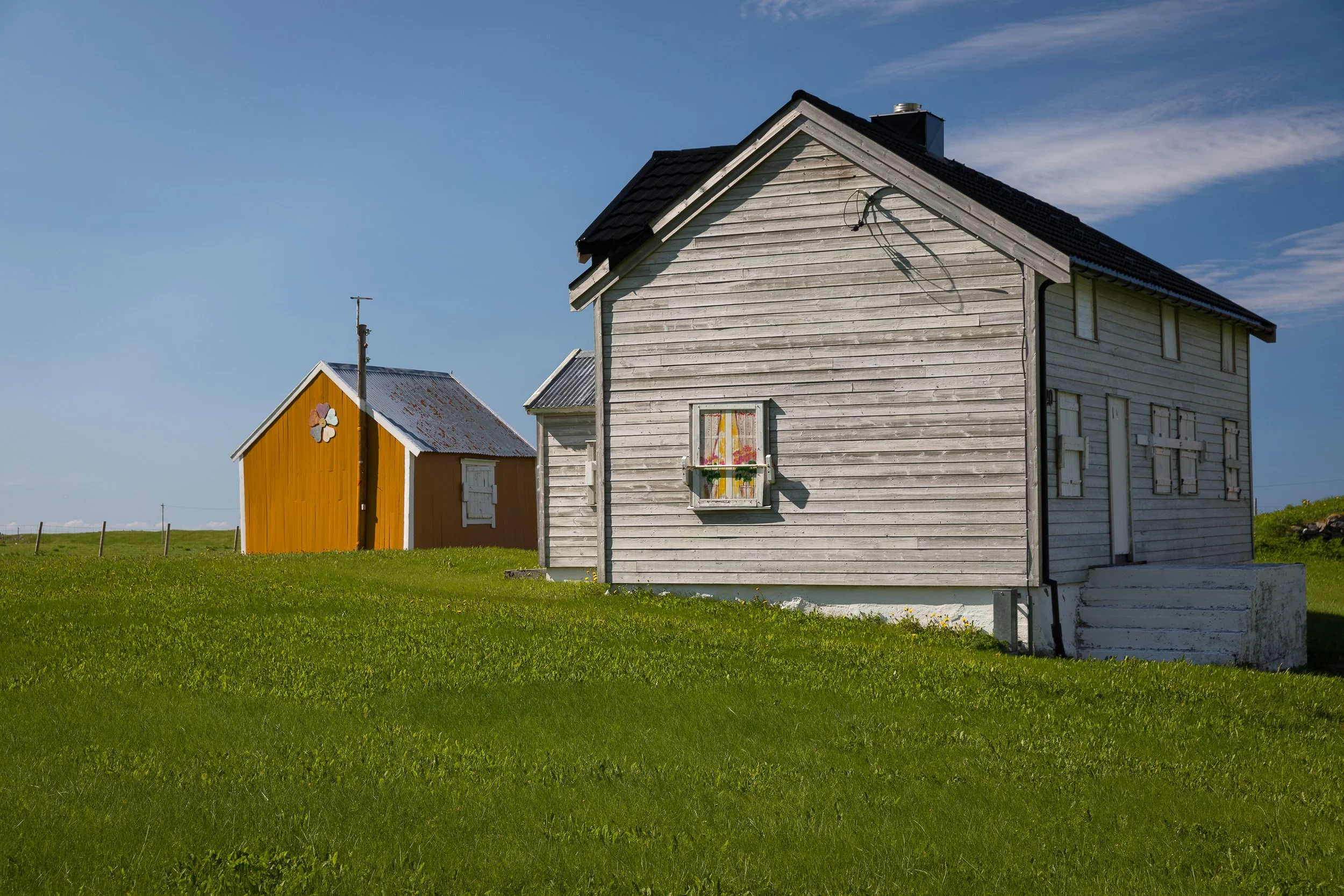
Cabin in the Lofoten Islands, Norway – a solitary wooden house facing the sea with mountains rising behind.
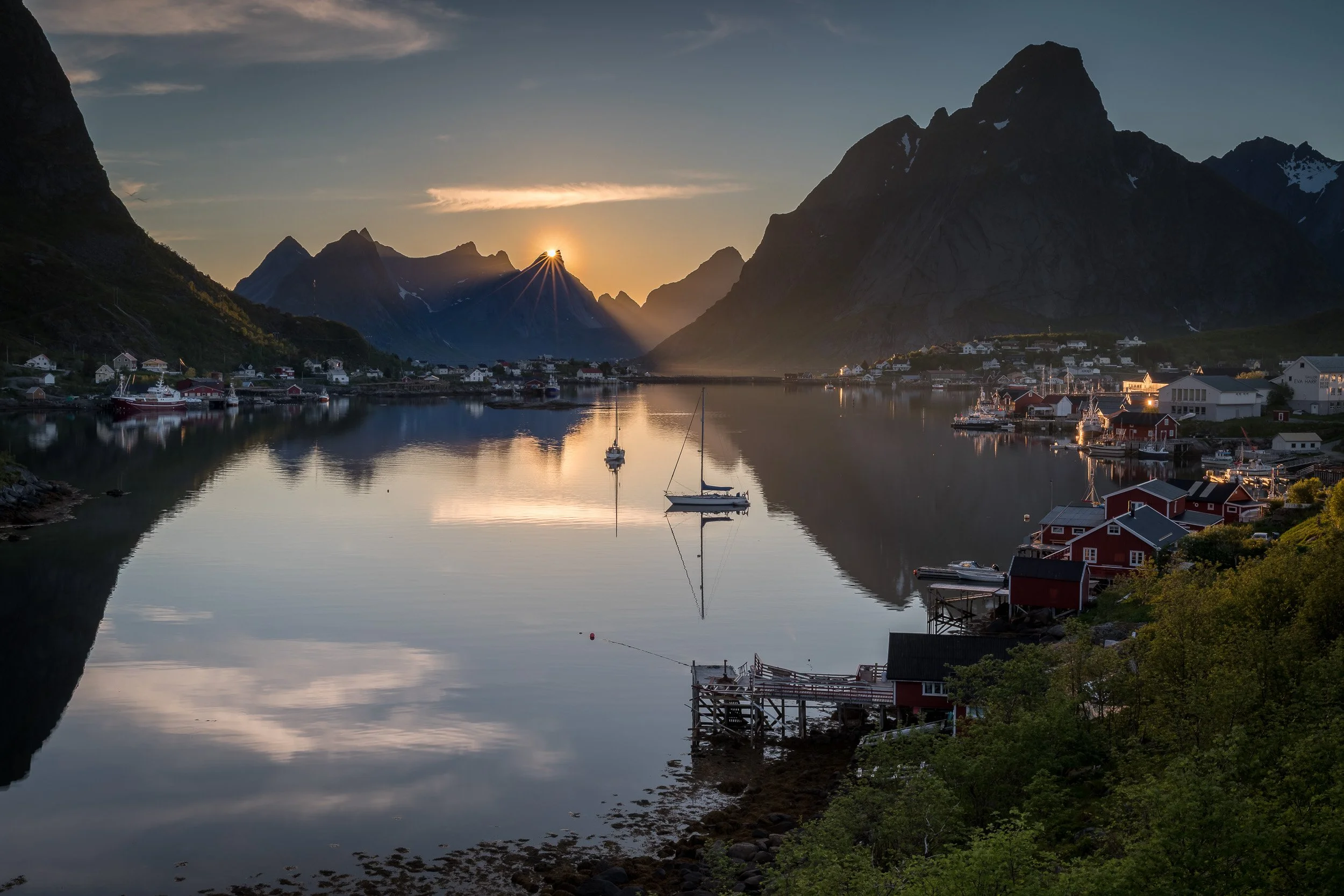
Midnight sun in Reine, Lofoten Islands, Norway – orange Arctic light skimming the horizon over calm water and islands.
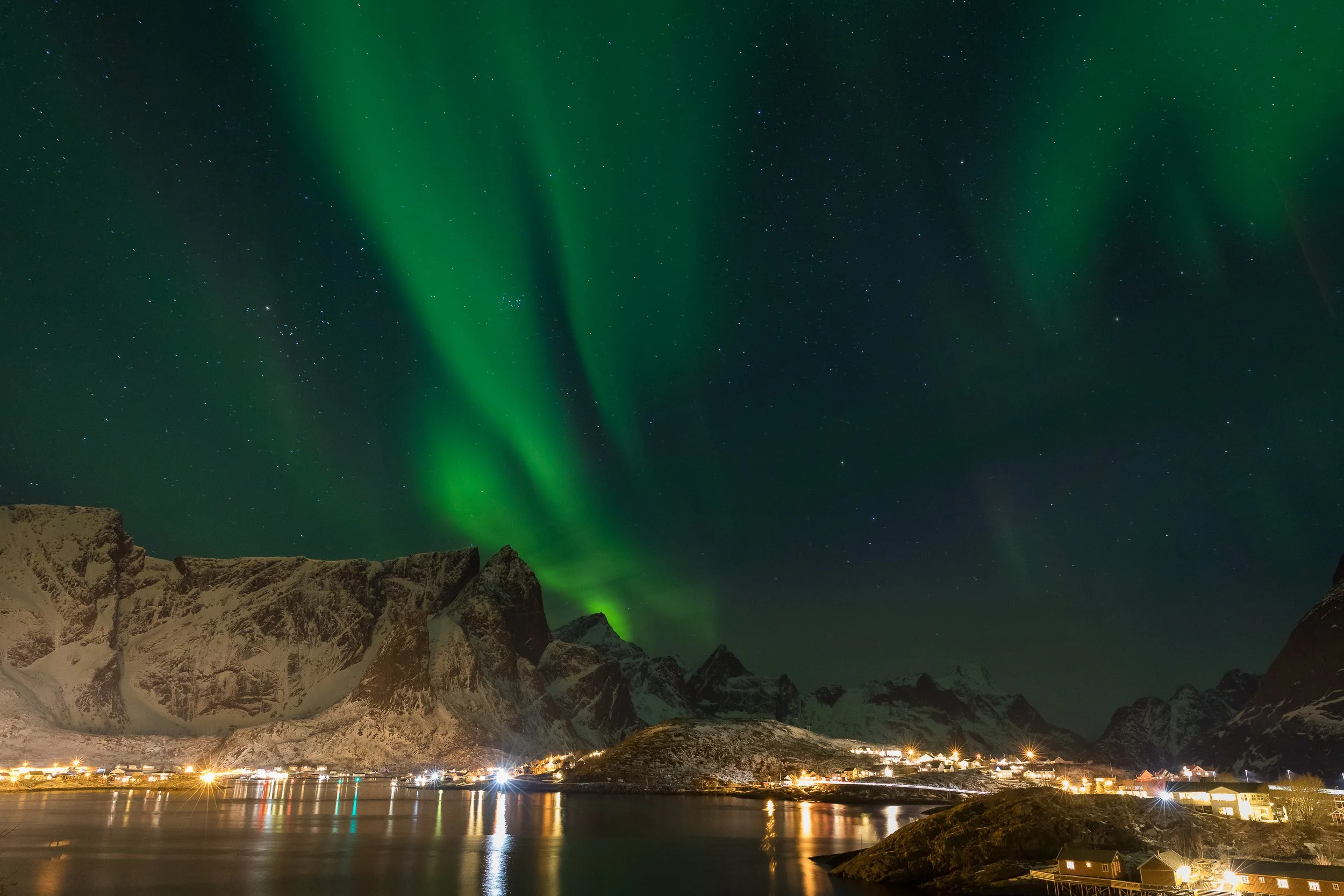
Northern lights (aurora borealis) in Reine, Lofoten Islands, Norway – green aurora above the fjord, fishing cabins and surrounding mountains.
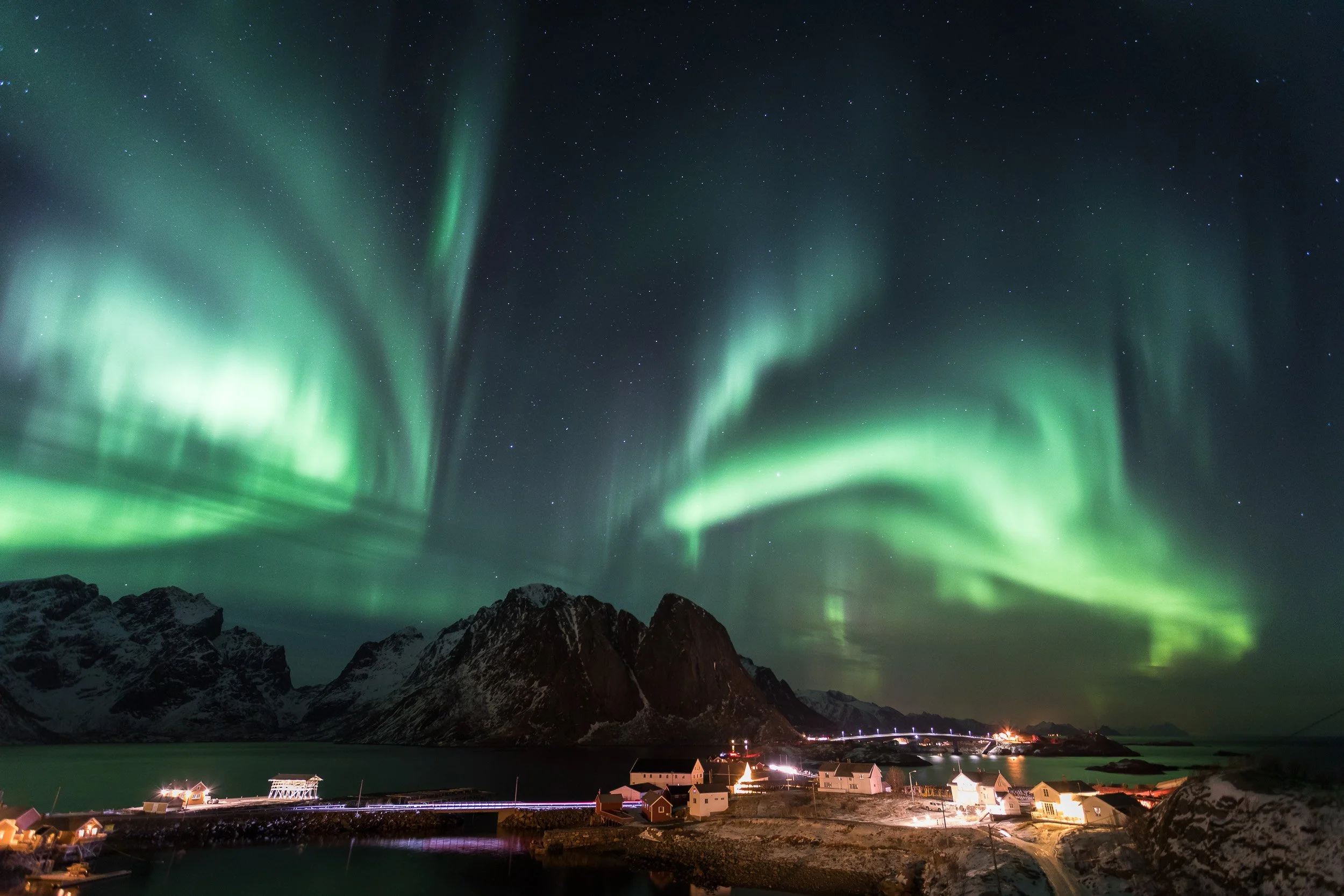
Northern lights (aurora borealis) in Reine, Lofoten Islands, Norway – starry sky and green aurora bands over the village.
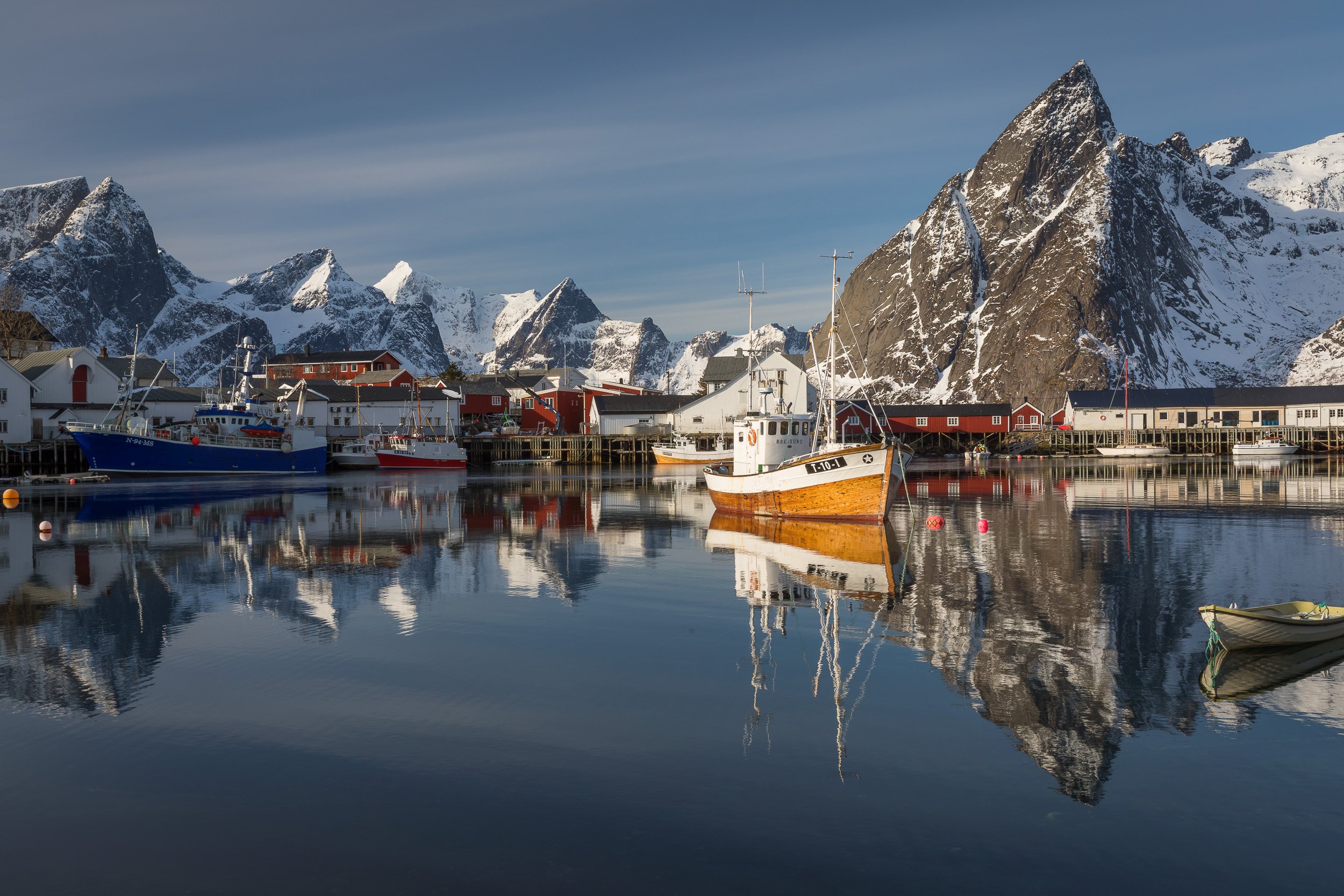
Hamnøy in the Lofoten Islands, Norway – red fishing cabins beside the fjord with steep Arctic mountains rising behind. Related film opens on YouTube.
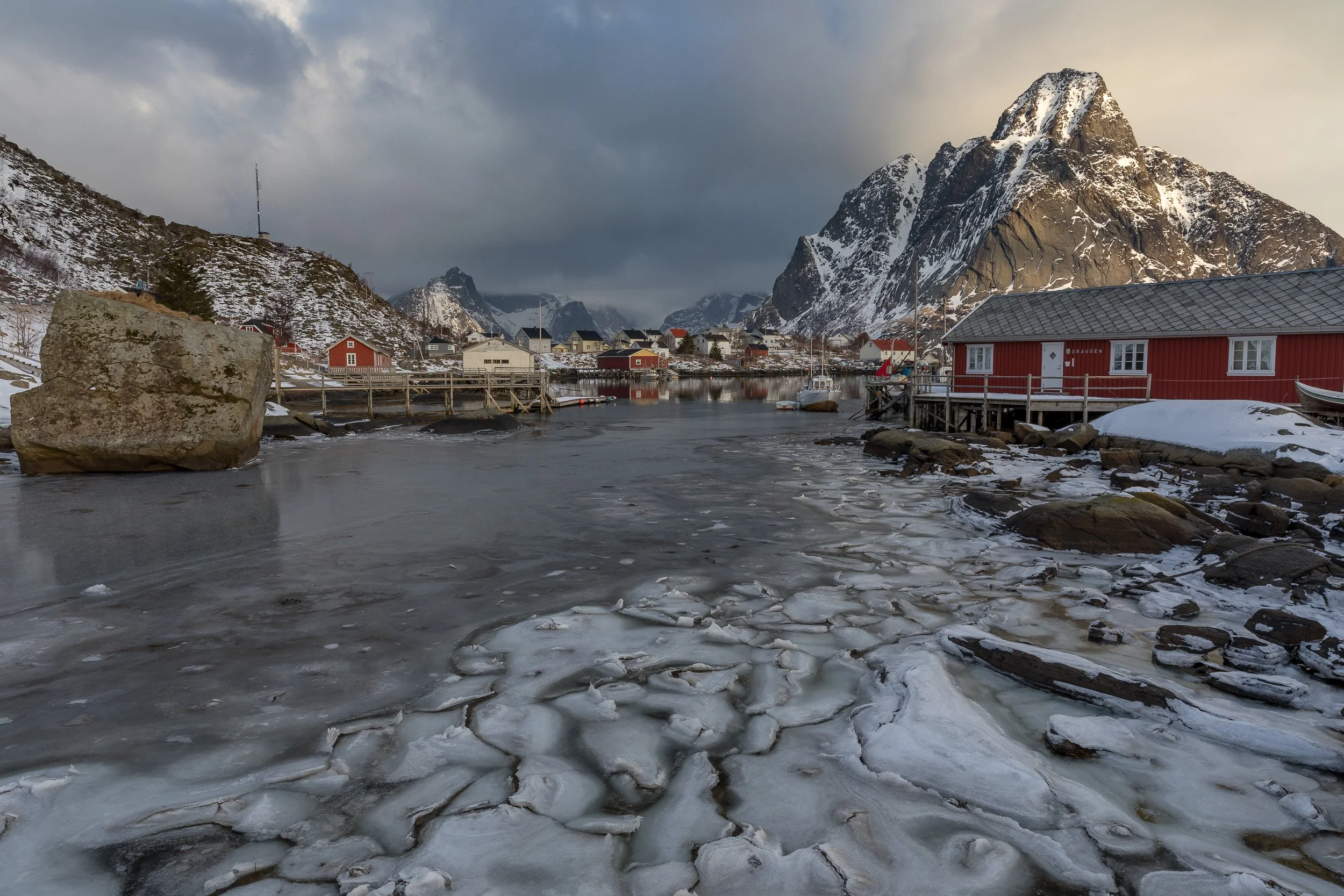
Winter in Reine, Lofoten Islands, Norway – snow-covered cabins and mountains reflected in a cold blue fjord.
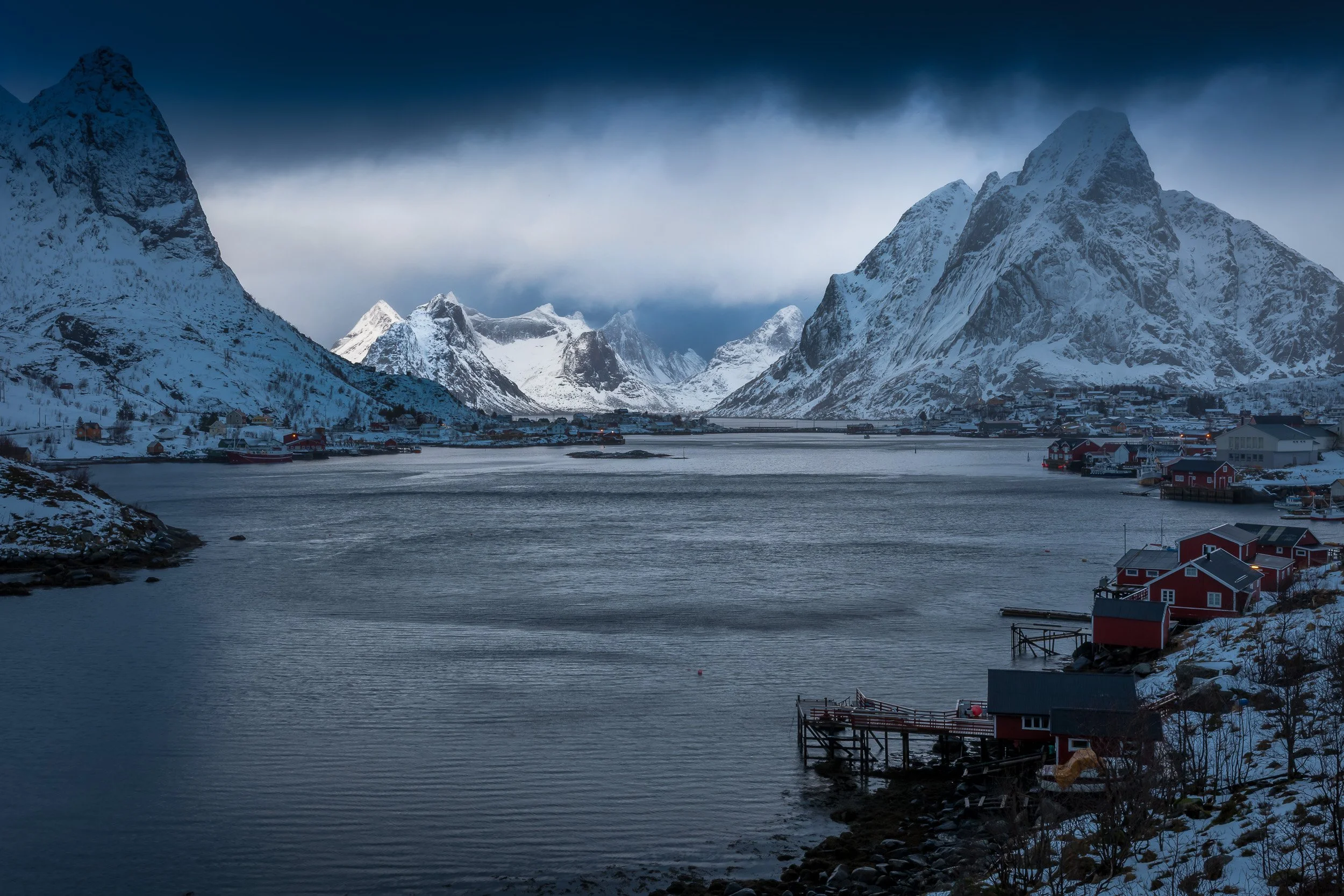
Winter light in Reine, Lofoten Islands, Norway – blue hour glow on snow, cabins and mountains in the polar night.
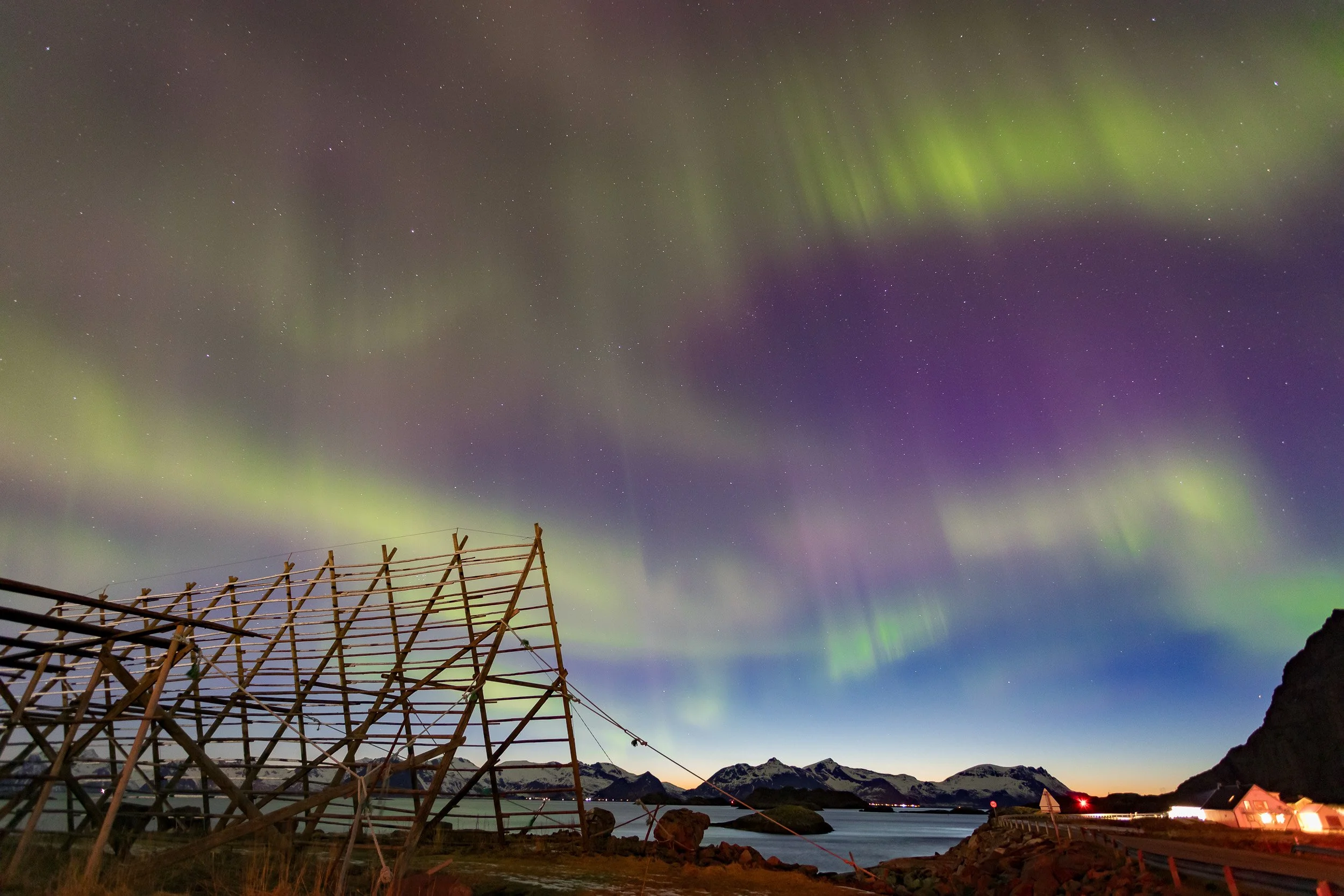
Northern lights (aurora borealis) in Henningsvær, Lofoten Islands, Norway – green aurora above the harbour and surrounding peaks in the Arctic night.
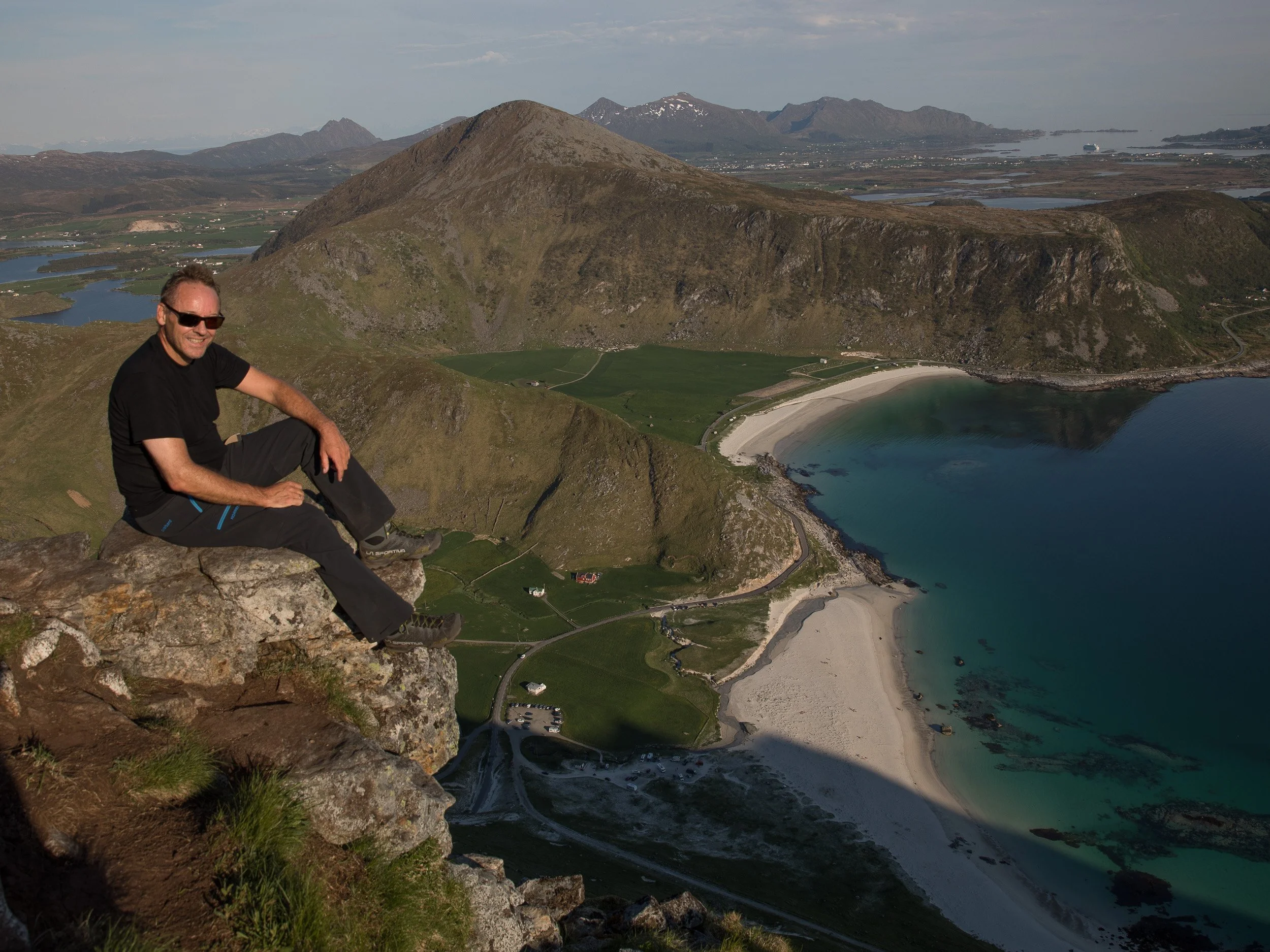
All photographs on this page were taken by Norwegian landscape and travel photographer Svein Magne Tunli.
From the Journal
A personal reflection on returning to Lofoten, from Arctic winter light and fishing villages to midnight sun and northern lights.